Powdered Sugar Frosting is the secret weapon every home baker needs to transform simple treats into bakery-quality masterpieces. Whether you are looking for a perfectly smooth, opaque coating or a glossy white drizzle, this recipe delivers a professional finish with minimal effort. Unlike heavy buttercreams, this icing sets with a beautiful, high-shine sheen that looks stunning on any dessert table.
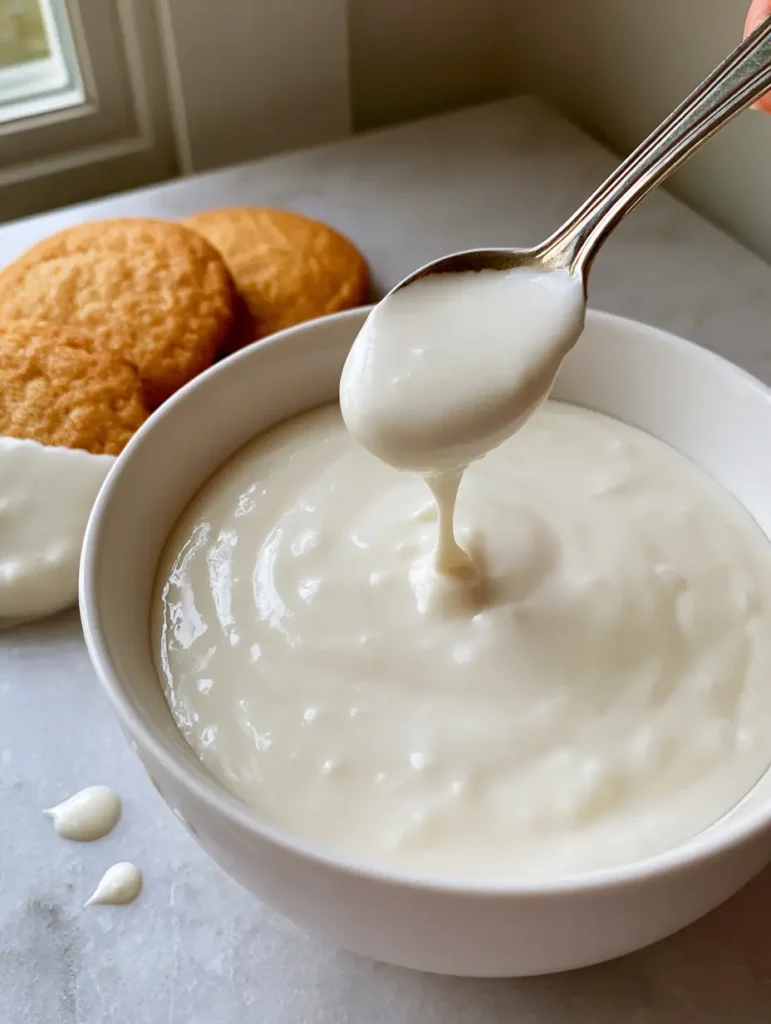
Imagine a crisp, golden-brown sugar cookie half-dipped into a pool of thick, bright white icing. As you lift the cookie, the Powdered Sugar Frosting clings to the surface, creating a sharp, clean line that professional decorators envy. This recipe is specifically designed to provide that viscous, creamy texture that flows like a silk ribbon but sets firm enough for stacking and gifting.
Why This Is The Only Cookie Icing Recipe You Need
- High-Shine Glossy Finish: Achieve a professional, light-reflecting surface that stays bright white even after drying.
- Perfect Dipping Consistency: The viscosity is engineered to create a thick white powdered sugar icing coating that won’t run off the edges.
- Customizable Opacity: Easily adjust the thickness to move from a sheer glaze to a bold, opaque white finish.
- Pantry Staple Simplicity: Made with just a few basic ingredients you likely already have in your kitchen.
The Anatomy of Perfect Powdered Sugar Frosting
To achieve the thick white powdered sugar icing seen in our visual blueprint, each ingredient serves a specific culinary purpose. We aren’t just mixing sugar and water; we are creating a stable suspension of solids in liquid.
Powdered Sugar (Confectioners’ Sugar): 4 cups (480g). This is the base of our structure. It must be finely ground to ensure a smooth, grit-free mouthfeel. Always look for sugar that includes a touch of cornstarch, which helps the Powdered Sugar Frosting set firmly.
Whole Milk or Heavy Cream: 4 to 6 tablespoons (60-90ml). This is your solvent. Milk provides a cleaner white color, while heavy cream adds a richer, more luxurious mouthfeel. Start with less and add more drop by drop to reach the perfect “ribbon” stage.
Light Corn Syrup: 2 teaspoons (10ml). This is the professional baker’s secret for a high-shine finish. It prevents the sugar from crystallizing into a dull matte and gives the icing its signature glossy white drizzle appearance.
Pure Vanilla Extract: 1 teaspoon (5ml). For a truly bright white icing, use clear vanilla extract. Traditional brown vanilla will tint the frosting slightly off-white, though the flavor remains excellent.
Pinch of Fine Salt: A tiny amount of salt cuts through the intense sweetness of the sugar, balancing the flavor profile so the vanilla can shine.

How to Make Thick White Powdered Sugar Icing
Step 1: The Sifting Essential
Begin by sifting your 4 cups (480g) of powdered sugar into a large white ceramic bowl. Even if your sugar looks fine, small clumps can ruin the glossy white drizzle. Sifting aerates the sugar, ensuring that when the liquid hits the powder, it incorporates instantly without forming stubborn lumps.
Step 2: Building the Emulsion
Add the 2 teaspoons (10ml) of corn syrup, 1 teaspoon (5ml) of vanilla, and the first 4 tablespoons (60ml) of milk to the center of the sugar. Using a silver spoon or a small whisk, begin stirring from the center outward. You want to slowly hydrate the sugar to maintain a viscous and creamy texture.
Step 3: The Ribbon Test
This is the most critical stage. Lift your spoon from the bowl. The Powdered Sugar Frosting should fall back into the mixture in a smooth, opaque ribbon. If the ribbon disappears instantly, the icing is too thin. If it holds its shape for 5-8 seconds before melting back in, it is perfect for dipping golden-brown sugar cookies.
Step 4: Achieving the Sharp Dipped Line
To get that clean, sharp line where the icing meets the cookie, hold a cooled sugar cookie by the edges. Lower it halfway into the icing at a slight angle. Lift it straight up and give it a small, gentle shake to let the excess drip off. You will see a smooth, opaque ribbon of icing fall back into the bowl, leaving a perfect coating on the cookie.
Expert Tips for Success
- Control the Temperature: Ensure your cookies are completely cool. If the cookie is even slightly warm, the Powdered Sugar Frosting will melt and become transparent rather than opaque.
- Fixing Thin Icing: If you accidentally added too much milk, add more sifted sugar one tablespoon at a time. Do not just pour it in, or you will create lumps.
- Avoid Air Bubbles: Stir your icing slowly with a spoon rather than whisking vigorously. Whisking incorporates air, which creates tiny bubbles that can pop and leave pits in your glossy white finish.
- The “Crust” Factor: This icing begins to set quickly. Keep the bowl covered with a damp paper towel when not actively dipping to prevent a sugar crust from forming on the surface.
If you love this texture but want something even fluffier for a layer cake, you might want to try our marshmallow buttercream frosting for your next project.
Storage and Make-Ahead Instructions
Room Temperature: Once set on cookies, these treats can be stored in an airtight container for up to 5 days. The Powdered Sugar Frosting acts as a seal, keeping the cookies soft.
Refrigeration: You can store leftover icing in the fridge for up to 2 weeks. Place a piece of plastic wrap directly on the surface of the icing before sealing the container to prevent a skin from forming. Before using, let it come to room temperature and give it a good stir.
Freezing: I do not recommend freezing the liquid icing, as the sugar may crystallize upon thawing. However, cookies already decorated with this frosting freeze beautifully for up to 3 months.
What to Serve With This Frosting
This Powdered Sugar Frosting is incredibly versatile. While it is the gold standard for round sugar cookies, it also pairs perfectly with:
- Fruit-Filled Donuts: Use it as a dip for peach cobbler cheesecake donuts.
- Breakfast Pastries: Drizzle it over warm cinnamon rolls or a ham and cheese puff pastry for a sweet-and-salty contrast.
- Holiday Platters: Serve dipped cookies alongside a banana pudding fluff salad for a nostalgic dessert spread.
Frequently Asked Questions
Absolutely! Use gel food coloring for the best results, as liquid coloring can thin out the consistency of the frosting too much.
Yes, water works fine, but milk or cream provides a more vibrant, opaque white color and a richer flavor profile.
The secret to a glossy, light-reflecting finish is adding a small amount of light corn syrup. It prevents the sugar from crystallizing into a dull matte texture as it dries.
Depending on humidity, the frosting will ‘crust’ within 30 minutes and be firm enough to stack after 4 to 24 hours.
Transparency usually means there is too much liquid or the cookie was too warm when dipped. Add more sifted powdered sugar to increase opacity and ensure cookies are completely cool.
The Best Powdered Sugar Frosting Recipe

Powdered Sugar Frosting: The Ultimate Glossy White Cookie Icing
Ingredients
Equipment
Method
- Sift the powdered sugar into a medium bowl to ensure a smooth texture without lumps.
- Add corn syrup, vanilla, salt, and 4 tablespoons of milk to the sugar.
- Stir with a spoon until a thick, creamy paste forms. Add remaining milk one teaspoon at a time until the icing falls in a slow, opaque ribbon from the spoon.
- Hold a golden-brown sugar cookie and dip halfway into the frosting. Lift straight up and allow the excess to drip back into the bowl before placing on a wire rack to set.
Notes
Add food coloring after the icing is fully mixed for vibrant variations.

Save This Recipe for Later!
If you enjoyed making this Powdered Sugar Frosting, please save it to your favorite dessert board on Pinterest! Following @savorycrafted helps us continue to share these detailed culinary guides with you. We would love to see your glossy creations—upload a photo of your dipped cookies in the comments below and don’t forget to leave a 5-star rating if this icing became your new go-to!