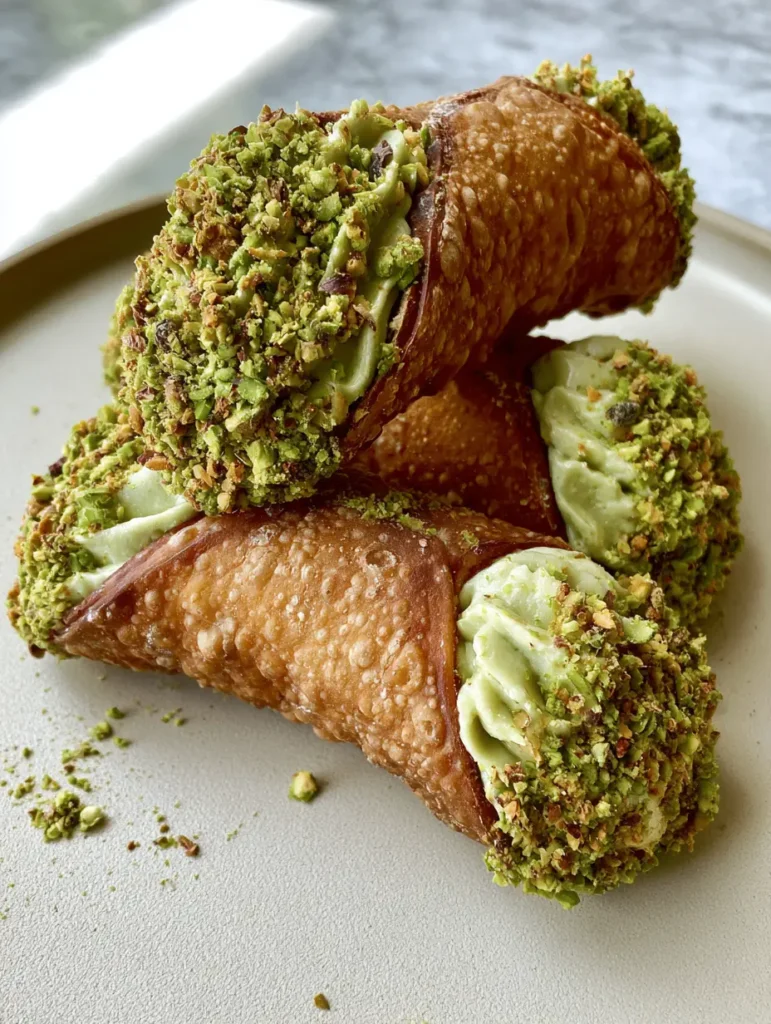
This Pistachio Cannoli Recipe is the ultimate tribute to Sicilian pastry craftsmanship, featuring golden-brown, deep-fried pastry shells with a signature bubbly, crisp texture. If you have been searching for that perfect Pistachio Cannoli Recipe that looks exactly like a high-end Italian bakery, you have found it. Every bite offers a contrast between the shatteringly crisp shell and the dense, smooth, pale pistachio-green mascarpone cream filling.
Creating an authentic Pistachio Cannoli Recipe at home might seem intimidating, but the secret lies in the fermentation of the dough and the temperature of the oil. These cannoli are finished by dipping the ends in a thick layer of finely crushed, bright green roasted pistachio nuts for a salty-sweet crunch. This dessert isn’t just a treat; it is a visual masterpiece that will stop any Pinterest scroller in their tracks.
Why You Will Crave This Authentic Pistachio Cannoli Recipe
- The Perfect Bubble: Our dough uses a precise ratio of acid to create those iconic micro-blisters on the golden-brown surface.
- Velvety Mascarpone Base: Unlike gritty ricotta versions, this Pistachio Cannoli Recipe uses smooth mascarpone for a luxurious mouthfeel.
- Triple Pistachio Impact: We use high-quality paste in the cream and freshly roasted, crushed nuts for the coating.
- Pro-Level Crunch: We share the secret to keeping your shells crisp for hours, even after filling.
Essential Ingredients for the Best Pistachio Cannoli
The success of a Pistachio Cannoli Recipe depends entirely on the quality of your fats and acids. Each ingredient serves a specific scientific purpose in creating the texture you see in professional pastry shops.
For the Bubbly Cannoli Shells
- All-Purpose Flour (2 cups / 250g): Provides the structural protein needed to hold the shape of the tube during frying.
- Granulated Sugar (2 tbsp / 25g): Aids in the browning process (Maillard reaction) for that deep golden hue.
- Unsalted Butter (3 tbsp / 45g): Cubed and cold; this creates the “short” texture in the pastry.
- Marsala Wine (1/2 cup / 120ml): The acidity and alcohol are crucial; they break down gluten and create steam pockets for bubbles.
- Cocoa Powder (1 tsp / 5g): Just enough to deepen the color without making the shell taste like chocolate.
- Fine Sea Salt (1/2 tsp): Essential for balancing the sweetness of the rich Pistachio Cannoli Recipe filling.
- Egg White (1 large): Used as “glue” to seal the dough around the cannoli forms.
- Neutral Oil (2 quarts / 2L): For deep frying; use vegetable or grapeseed oil with a high smoke point.
For the Smooth Pistachio Mascarpone Filling
- Mascarpone Cheese (16 oz / 450g): Must be very cold; it provides a much denser, smoother base than traditional ricotta.
- Pistachio Paste (1/3 cup / 80ml): Look for 100% pure pistachio paste to get that natural pale-green color.
- Powdered Sugar (1 cup / 120g): Sifted to ensure there are no lumps in your silky Pistachio Cannoli Recipe cream.
- Vanilla Paste (1 tsp): Adds aromatic depth that complements the nuttiness of the pistachios.
- Roasted Green Pistachios (1/2 cup / 60g): Finely crushed for dipping the ends.
If you love mastering technical desserts, you might also enjoy my strawberry shortcake sheet cake for your next gathering.
Step-by-Step Instructions: Mastering the Shell
The hallmark of a great Pistachio Cannoli Recipe is the shell. It must be thin enough to shatter but strong enough to hold the dense cream.
1. Prepare and Rest the Dough
In a large bowl, whisk together the flour, sugar, cocoa powder, and salt. Rub the cold butter into the flour using your fingertips until it resembles coarse sand. Slowing add the Marsala wine, mixing until a shaggy dough forms.
Knead the dough on a lightly floured surface for 10 minutes. It will be quite stiff, but this is necessary for the structure. Wrap tightly in plastic and let it rest at room temperature for at least 1 hour. This resting period allows the gluten to relax and the wine to hydrate the flour.
2. Rolling and Cutting
Divide the dough into four pieces. Using a pasta roller or a heavy rolling pin, roll the dough until it is paper-thin (about 1/16th of an inch). You should almost be able to see your hand through it.
Use a 4-inch (10cm) circular cutter to cut rounds. Stretch each round into an oval. This ensures the dough wraps perfectly around the cannoli tube with enough overlap to seal.
3. Frying for the Perfect Bubble
Heat your oil to exactly 375°F (190°C). Wrap each dough oval around a metal cannoli form. Brush a tiny amount of egg white on the edge where the dough overlaps and press firmly to seal.
Fry 2-3 shells at a time. Within seconds, you will see visual cues like small bubbles erupting on the surface. Fry for about 2 minutes until they are a deep golden brown. Carefully remove and drain on paper towels. Slide the shells off the forms while still warm, but be careful!
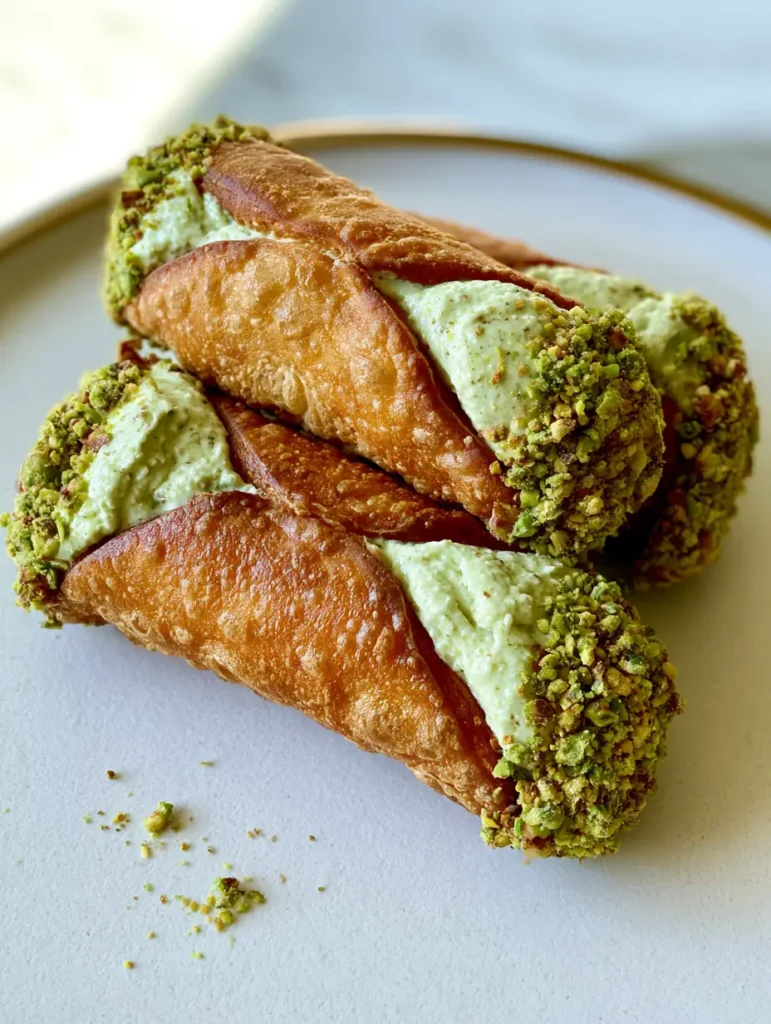
Creating the Silky Pistachio Filling
While the shells cool, it is time to focus on the heart of this Pistachio Cannoli Recipe: the cream. Unlike standard fillings, our version is inspired by northern Italian techniques using mascarpone.
1. Whip the Mascarpone
In a chilled bowl, beat the cold mascarpone and powdered sugar until smooth. Do not over-mix, or the mascarpone may split. Fold in the pistachio paste and vanilla until the color is a uniform, pale pistachio-green.
2. The Texture Check
The cream should be dense enough to hold its shape when piped. If it feels too soft, chill it in the refrigerator for 30 minutes before filling. For a lighter version, you could technically fold in some whipped cream frosting, but for an authentic feel, keep it dense.
Assembling Your Masterpiece
Wait until the very last moment to fill your shells to prevent them from becoming soggy. This is the “golden rule” of any Pistachio Cannoli Recipe.
- Load the Bag: Transfer the pistachio cream to a piping bag fitted with a large open star or round tip.
- Pipe with Precision: Insert the tip into one end of the shell and pipe to the center, then repeat from the other side. Ensure there are no air pockets.
- The Nutty Finish: Immediately dip the exposed cream ends into a bowl of finely crushed, bright green roasted pistachios. The nuts should form a thick, textured layer.
- Final Touch: A light dusting of powdered sugar over the top of the golden shells adds that final bakery-style aesthetic.
For a savory meal before this dessert, consider these garlic butter steak bites or my high protein Italian pasta salad.
Expert Tips for Success
- Oil Temperature is King: If the oil is too cold, the shells will be greasy. If it’s too hot, they will burn before the bubbles form. Use a candy thermometer!
- Thinner is Better: If your shells are too thick, they will be chewy rather than crispy. Use a pasta machine for the most consistent results.
- Pure Paste: Avoid “pistachio flavored” syrups. Only use 100% pistachio paste (usually found in the baking or international aisle) for the most vibrant flavor.
- Seal Tight: If you don’t press the dough seal firmly with the egg white, the shells will unravel in the hot oil.
Storage, Reheating & Freezing
Unfilled Shells: These can be stored in an airtight container at room temperature for up to 5 days. Keep them in a cool, dry place to maintain the crunch.
Pistachio Cream: The filling can be made 2 days in advance and stored in the fridge in a piping bag. Do not freeze the mascarpone cream, as the texture will become grainy.
Filled Cannoli: These are best eaten within 1-2 hours. If you must store them, they will last about 4 hours in the fridge before the shell softens significantly.
What to Serve With Pistachio Cannoli
This rich dessert pairs beautifully with a bitter Espresso or a glass of chilled Vin Santo. If you are serving these at a summer party, they go wonderfully alongside a frozen peach smoothie for a refreshing contrast.
Frequently Asked Questions
Technically yes, but you will lose the signature bubbly texture and rich flavor. Fried shells are the standard for an authentic Pistachio Cannoli Recipe.
Pistachio paste is usually 100% nuts and very concentrated. Pistachio butter often contains added oils and sugars, which can make the mascarpone cream too soft. Always check the label!
The only way to ensure a crispy cannoli is to fill them right before serving. For a longer-lasting crunch, you can brush the inside of the shells with melted chocolate to create a moisture barrier.
You can substitute with dry white wine or a mix of white grape juice and a tablespoon of white vinegar. The acidity is the most important factor for the dough texture.
Bubbles are caused by the reaction of acid (Marsala wine) and heat. If your oil isn’t hot enough (375°F) or you didn’t include enough acid in the dough, the blisters won’t form.
The Ultimate Pistachio Cannoli Recipe
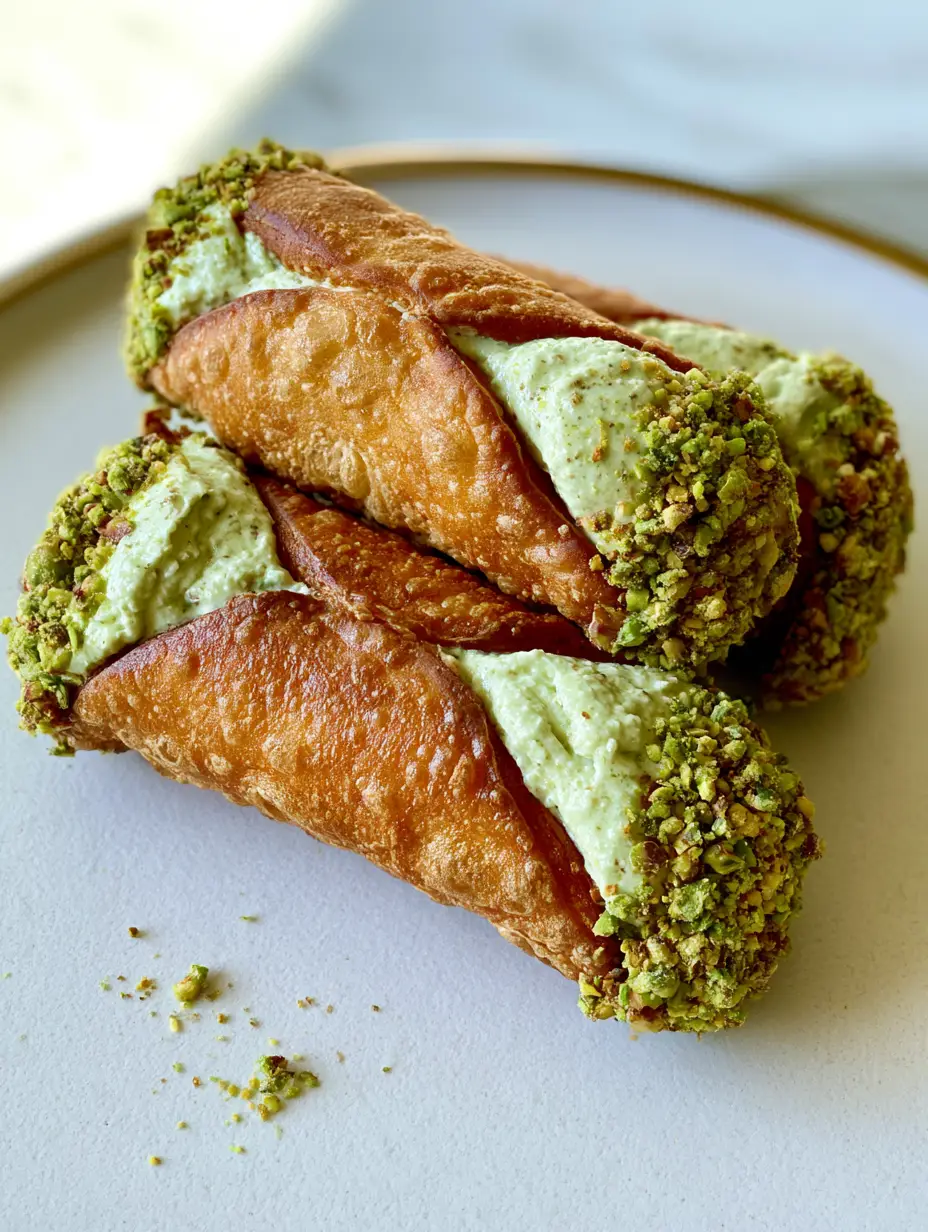
Pistachio Cannoli Recipe: Authentic Italian Crispy Pastry
Ingredients
Equipment
Method
- Combine dry ingredients, rub in butter, add wine, and knead for 10 minutes until smooth but stiff.
- Wrap the dough in plastic and rest for 1 hour at room temperature to relax the gluten.
- Roll dough to 1/16th inch thickness and cut into 4-inch circles. Stretch into ovals.
- Wrap around tubes, seal with egg white, and fry at 375°F (190°C) for 2 minutes until bubbly and golden.
- Beat mascarpone, sugar, and pistachio paste until thick and smooth.
- Pipe cream into cooled shells and dip ends into crushed pistachios.
Notes
Ensure your frying oil stays consistent at 375°F for the best bubbles.
Save This Recipe to Pinterest!
If you love this Pistachio Cannoli Recipe, don’t let it disappear! Pin it to your “Italian Desserts” or “Holiday Baking” board so you can find it later. We love seeing your recreations—take a photo of your bubbly shells and pale green filling and share it in the comments below. Don’t forget to leave a 5-star rating if you enjoyed the crunch!
For more authentic flavors, follow savorycrafted for weekly kitchen inspiration.