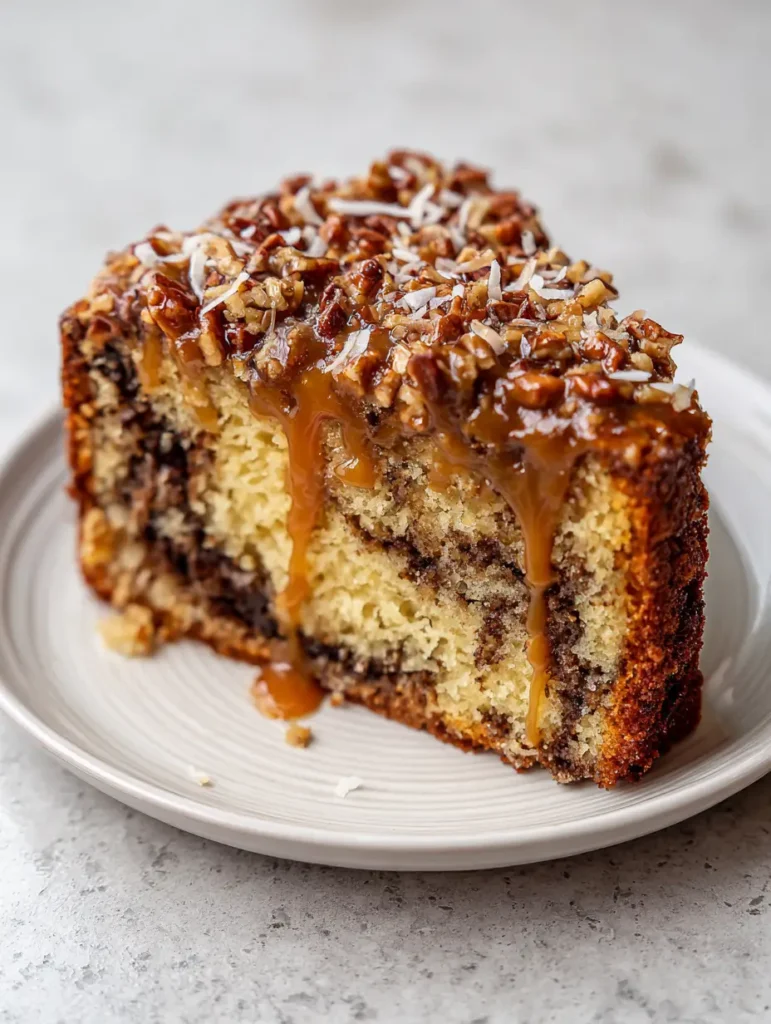
Experience the ultimate fusion of a Southern classic and a German tradition with this incredible German Chocolate Pound Cake. This isn’t just another dry cake; it features a remarkably dense, buttery crumb that holds its own against a waterfall of glossy caramel glaze.
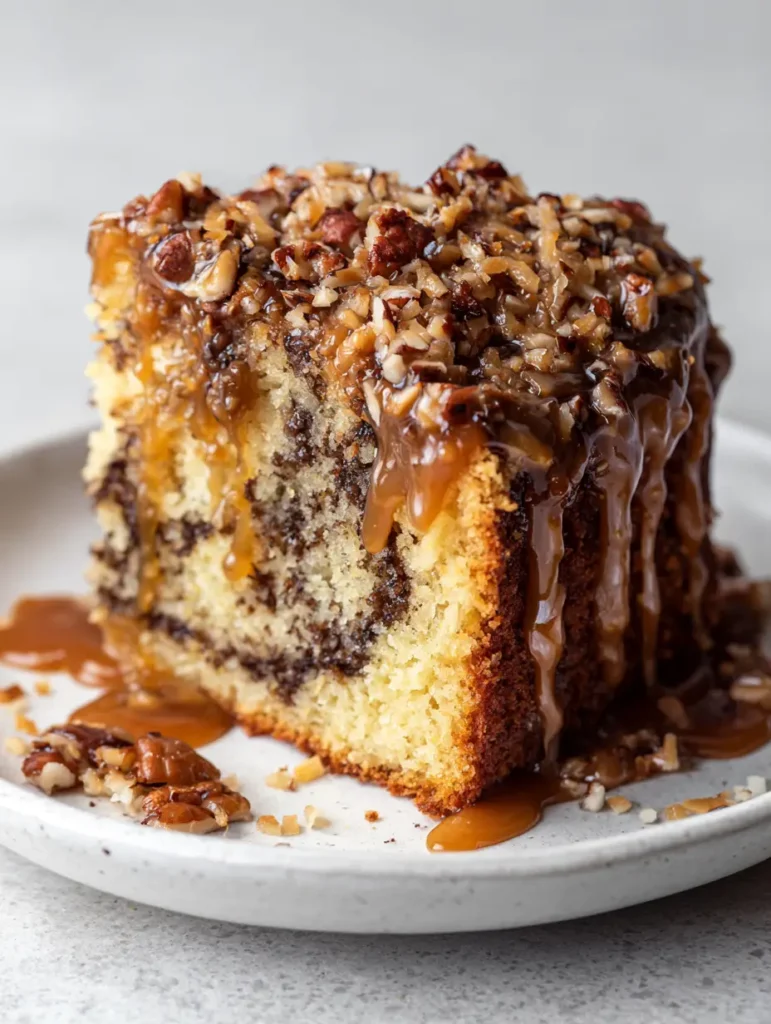
The visual centerpiece of this dessert is the stunning dark chocolate marbling that weaves through every thick slice. Whether you are hosting a holiday dinner or simply craving a sophisticated treat with your morning coffee, this recipe delivers professional results with a handheld, rustic charm.
Imagine a slow-dripping, golden-brown glaze packed with the crunch of toasted pecans and the chewy sweetness of shredded coconut. It is the kind of dessert that stops people in their tracks when they see it sitting on a simple white ceramic plate.
Why This Marbled Pound Cake Recipe Works
- Dense, Buttery Texture: We use a high butter-to-flour ratio to ensure a crumb that is moist yet sturdy enough to support the heavy nut topping.
- Intricate Chocolate Swirls: By splitting the batter and using Dutch-processed cocoa, we create high-contrast dark chocolate swirls that look like a professional bakery creation.
- Slow-Dripping Caramel Glaze: Our glaze is scientifically balanced to be thick enough to cling to the cake while maintaining a beautiful, gooey sheen.
- Toasted Nut Complexity: Roasting the pecans beforehand unlocks a deep, smoky flavor that cuts through the sweetness of the coconut flakes.
The Foundation: Essential Ingredients and Substitutions
Unsalted Butter (1 cup / 227g): High-quality butter provides the primary fat source for that signature pound cake richness. Ensure it is softened to room temperature so it creams perfectly with the sugar.
Granulated Sugar (2 cups / 400g): This provides sweetness and helps aerate the butter during the creaming process for a fine, tight crumb. Do not reduce the sugar, as it affects the cake’s structural moisture.
Large Eggs (5 units): Eggs provide the lift and structure necessary for a dense cake. Adding them one at a time prevents the emulsion from breaking, ensuring a smooth batter.
All-Purpose Flour (3 cups / 375g): This provides the necessary protein for a sturdy cake. If you want an even softer bite, you can substitute 1/2 cup with cornstarch, though the traditional dense crumb is preferred here.
Buttermilk (1 cup / 240ml): The acidity in buttermilk reacts with the leavening agents to tenderize the gluten. If you don’t have it, you can use a tangy substitute mindset by adding lemon juice to regular milk.
Dutch-Processed Cocoa Powder (1/4 cup / 25g): This is used for the chocolate marble. It offers a darker color and a smoother, more mellow chocolate flavor compared to natural cocoa.
Evaporated Milk (1/2 cup / 120ml): This is the secret to the thick caramel glaze. It provides a concentrated dairy richness that won’t make the glaze too runny.
Chopped Toasted Pecans (1 cup / 125g): These add essential crunch and earthy notes. Toasting them for 5-8 minutes in the oven is a non-negotiable step for maximum flavor.
Sweetened Shredded Coconut (1 cup / 90g): This provides the classic chewy texture synonymous with German chocolate cake. For a less sweet version, you can use unsweetened flakes.
Must-Have Tools for the Perfect Loaf
To achieve the visual result seen in the photos, you will need a 10-inch (25cm) tube pan or a large bundt pan. A standard loaf pan may overflow due to the volume of this dense batter.
A stand mixer or high-powered hand mixer is vital for the 5-minute creaming stage. Finally, a wire cooling rack is essential to ensure the glaze sets correctly without making the bottom of the cake soggy.
Step-by-Step Instructions for the Perfect Marble
1. Preparing the Base Batter
Preheat your oven to 325°F (165°C). Grease and flour your pan generously to ensure the cake slides out with a smooth exterior.
Cream the softened butter and granulated sugar for at least 5 minutes until the mixture looks pale and fluffy. Add the eggs one at a time, beating well after each addition until fully incorporated.
Whisk together your flour, salt, and baking powder. Gradually add the dry ingredients to the butter mixture, alternating with the buttermilk, starting and ending with the flour.
2. Creating the Chocolate Swirl
Remove 2 cups of the plain vanilla batter and place it in a separate bowl. Sift in the cocoa powder and add 2 tablespoons of warm water.
Fold the cocoa gently into the reserved batter until it is a deep, uniform dark brown. This contrast is what creates the “visible dark chocolate swirls” mentioned in our visual blueprint.
Drop alternating spoonfuls of the vanilla and chocolate batter into your prepared pan. Use a butter knife to gently swirl the batters together in a figure-eight motion—do not overmix, or you will lose the marbling effect.
3. Baking for Success
Bake for 65-75 minutes. You are looking for a golden-brown top and a toothpick that comes out clean with just a few moist crumbs.
Listen for the “sizzle” when you press the top lightly; if it’s silent and springs back, it’s done. Let the cake cool in the pan for 15 minutes before inverting it onto a cooling rack.
4. Crafting the Thick Caramel Glaze
In a small saucepan, combine evaporated milk, sugar, butter, and egg yolks. Cook over medium heat, stirring constantly until the mixture thickens into a glossy golden-brown caramel.
Remove from heat and immediately stir in the toasted pecans and shredded coconut. The glaze should be thick but pourable—if it’s too stiff, add a teaspoon of evaporated milk.
Pour the warm glaze over the cooled cake, allowing it to create that signature slow-dripping effect down the sides. While the glaze sets, you might want to whip up a stable whipped topping for serving on the side.
Expert Tips for a Professional Finish
- Room Temperature Ingredients: Ensure your eggs and buttermilk are not cold. This prevents the batter from curdling and ensures a smooth, emulsified crumb.
- The “Tap” Method: Once the batter is in the pan, tap it firmly on the counter three times. This removes large air bubbles that can ruin the “dense buttery crumb” look.
- Toast Your Coconut: For extra depth, toast half of your coconut flakes before adding them to the glaze. It adds a beautiful variegated color to the topping.
- Glaze Timing: Apply the glaze while it is still warm, but the cake is completely cool. This ensures the “gooey sheen” remains on the surface rather than soaking into the cake.
Storage and Reheating Advice
This German Chocolate Pound Cake stays moist for days thanks to the high fat content. Store it under a cake dome at room temperature for up to 3 days.
For longer storage, refrigerate for up to 1 week. If you prefer a warm slice, microwave it for 10-15 seconds to soften the caramel glaze and the buttery crumb.
You can freeze the unglazed cake for up to 3 months. Wrap it tightly in plastic wrap and foil. Always add the fresh glaze after thawing for the best visual appeal.
What to Pair With Your Pound Cake
While this cake is a star on its own, it pairs beautifully with a hot cup of coffee or a cold glass of refreshing fruit drink if you’re serving it as a summer brunch dessert.
If you’re hosting a full dinner party, start with something savory like tender steak bites or perhaps zesty enchiladas to balance the deep sweetness of the chocolate and caramel.
Frequently Asked Questions
Yes, but the chocolate swirls will be lighter in color and slightly more acidic. For the deep dark swirls seen in the photos, Dutch-processed is recommended.
Because of the dairy in the glaze, it is best to refrigerate the cake after 24 hours. However, it can sit at room temperature for a full day of serving.
The secret is to use Dutch-processed cocoa for color contrast and only swirl the batter 2-3 times with a knife. Over-swirling will cause the colors to muddy together.
Grease the pan with softened butter and then dust with flour, tapping out the excess. For even better results, use a professional baking spray that contains flour.
If the glaze is runny, it likely wasn’t cooked long enough to thicken the egg yolks and evaporated milk. Simmer it for an extra 1-2 minutes until it coats the back of a spoon.
The Ultimate German Chocolate Pound Cake Recipe
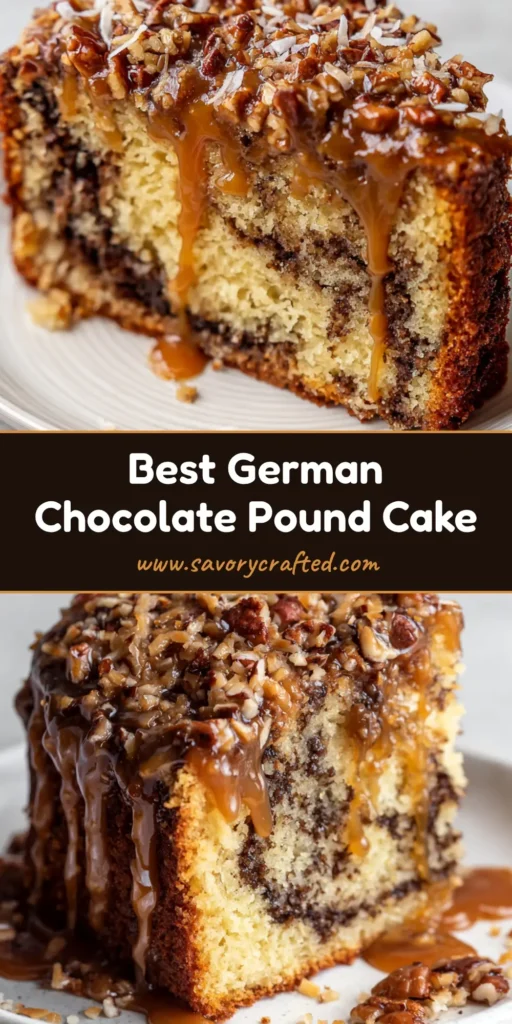
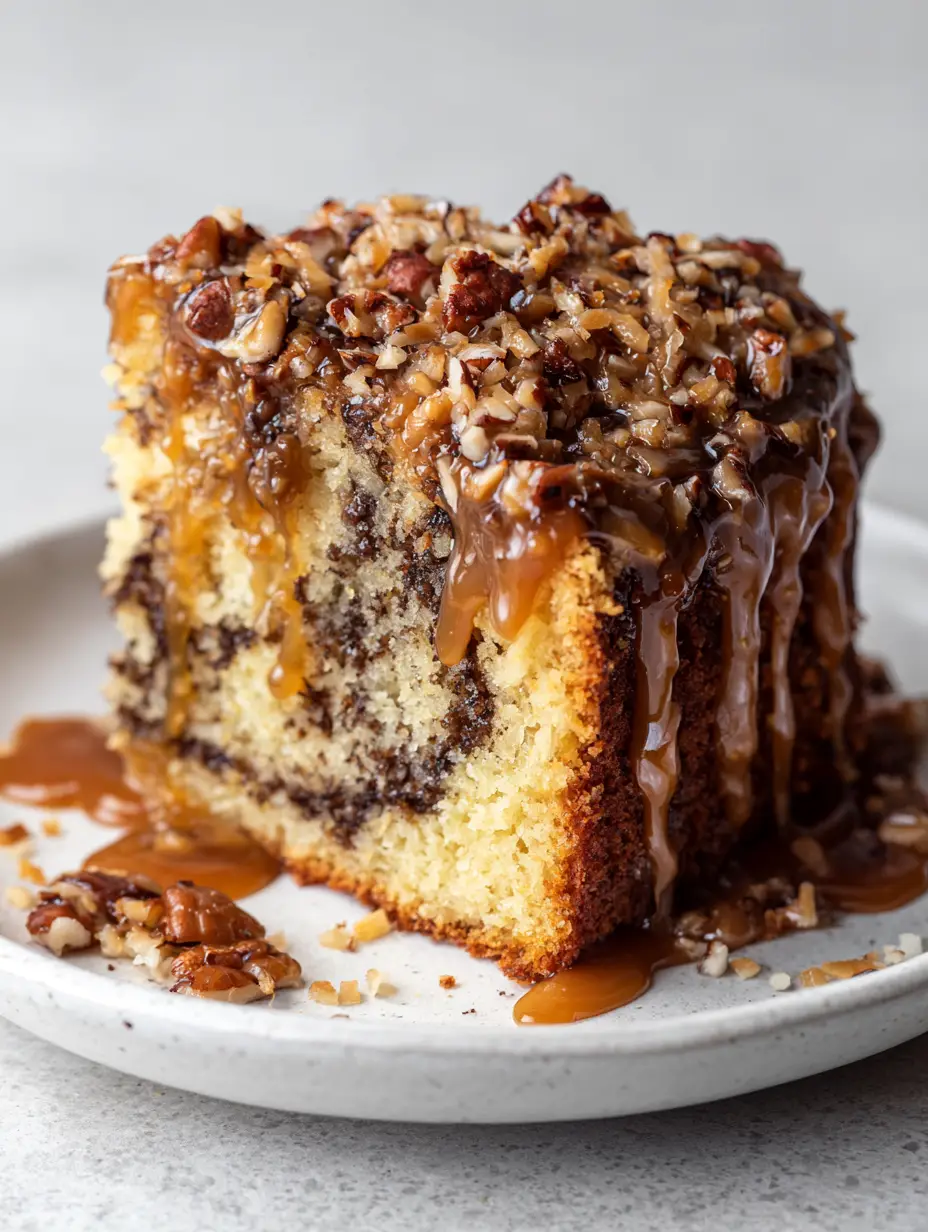
German Chocolate Pound Cake with Decadent Coconut Pecan Glaze
Ingredients
Equipment
Method
- Cream softened butter and sugar in a stand mixer for 5 minutes until pale and fluffy.
- Incorporate eggs one at a time, beating well after each. Mix in vanilla extract.
- Alternate adding flour and buttermilk to the butter mixture, starting and ending with flour.
- Remove 2 cups of batter, mix with cocoa and water. Swirl the two batters in the pan using a knife.
- Bake at 325°F (165°C) for 65-75 minutes until a toothpick comes out clean.
- Combine milk, sugar, butter, and yolks in a pan. Heat until thickened and glossy.
- Stir in the toasted pecans and coconut flakes. Pour over cooled cake immediately.
Notes
Toast the pecans for 8 minutes at 350°F to significantly enhance the flavor profile.
Closing & Call to Action
This German Chocolate Pound Cake is a masterclass in texture and flavor, bringing together a moist marbled interior with a rich, nutty topping. It is a reliable, show-stopping dessert that never fails to impress.
If you enjoyed this recipe, please leave a comment below and let us know how your marbling turned out! Don’t forget to share your creations and follow us on Pinterest for more culinary inspiration.