Bibim Guksu is the ultimate refreshing meal that perfectly balances spicy, sweet, and tangy flavors in one vibrant bowl. If you are looking for a dish that captures the essence of Korean street food while remaining incredibly simple to make at home, these spicy cold noodles are your answer. The combination of thin wheat somyeon noodles and a glossy gochujang sauce creates a sensory experience that is hard to beat.
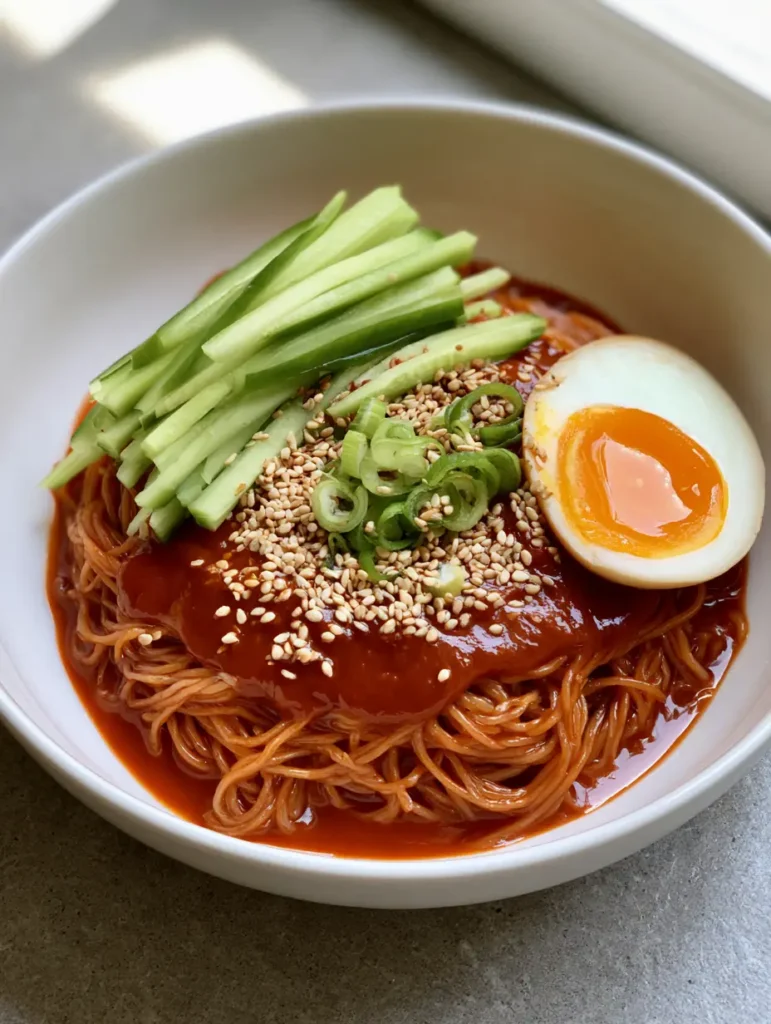
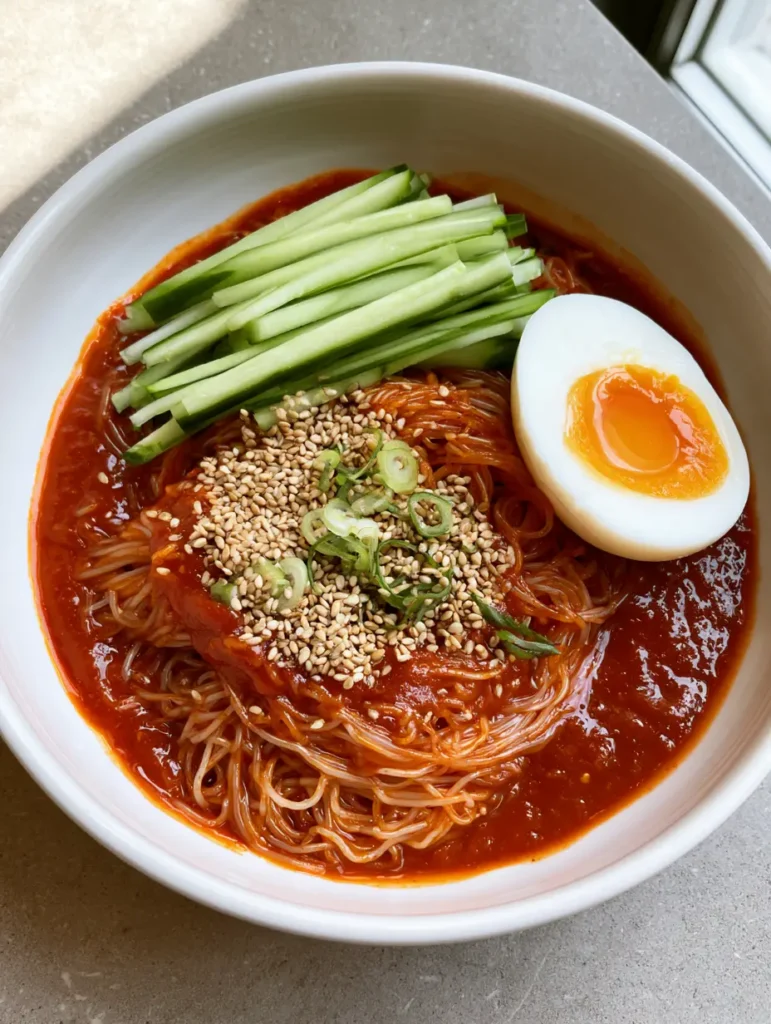
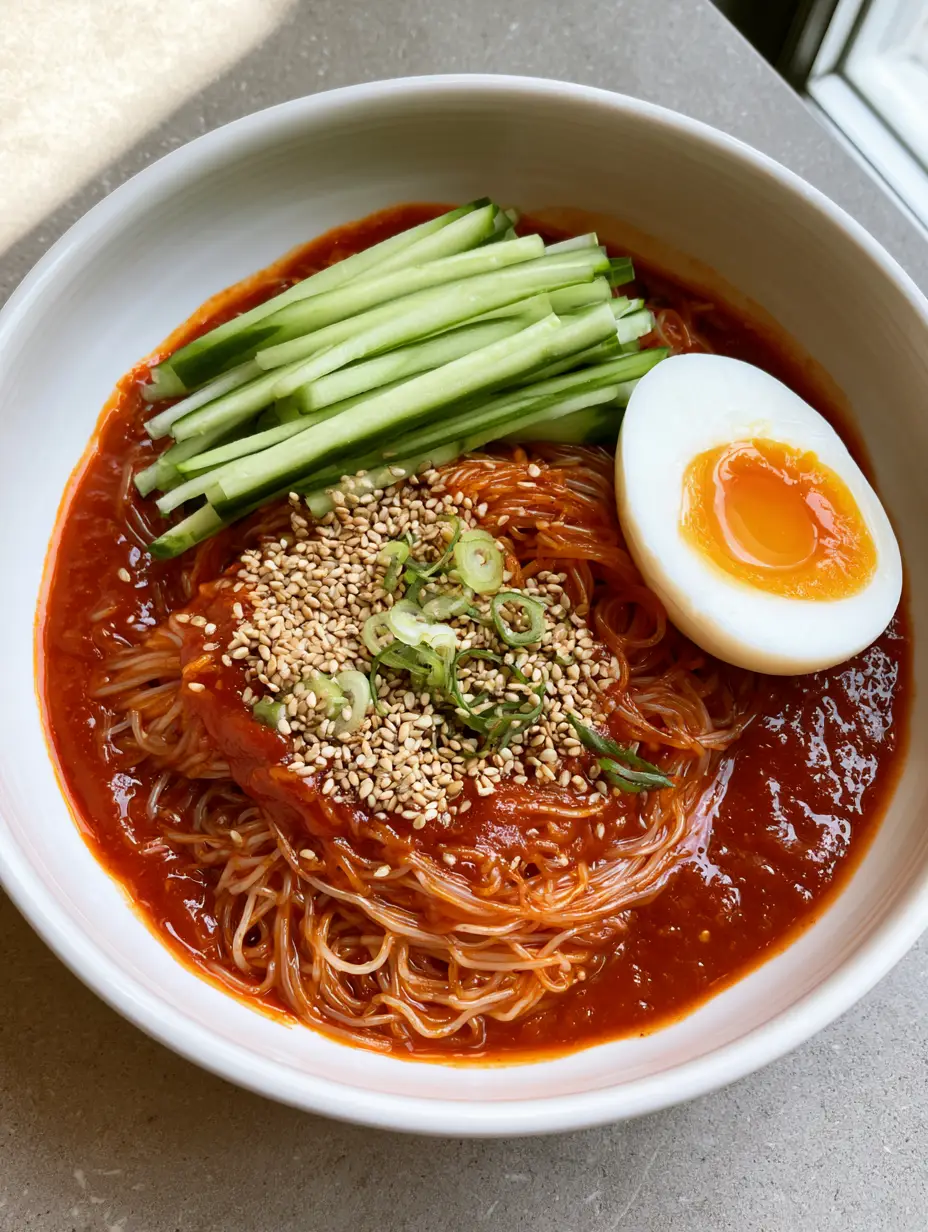
When you see a bowl of Bibim Guksu, the first thing that strikes you is the vibrant red sauce coating every individual strand of noodle. It’s not just about the heat; it’s about the depth of flavor provided by the fermented chili paste and the refreshing crunch of julienned fresh cucumber. This dish is a staple during hot Korean summers, but its addictive nature makes it a year-round favorite for those who crave bold, punchy flavors.
Why This Bibim Guksu Recipe Is a Total Game Changer
- The Perfect Glossy Finish: We use a specific ratio of sesame oil and liquid sweeteners to ensure your Bibim Guksu has that signature camera-ready sheen.
- Textural Contrast: The softness of the thin wheat somyeon noodles pairs perfectly with the crisp julienned fresh green cucumber matchsticks.
- The Jammy Yolk Factor: Our specific timing for the soft-boiled egg ensures a bright orange, liquid center that adds a rich, creamy element to the spicy sauce.
- Ultra-Fast Prep: From start to finish, you can have this restaurant-quality meal on the table in under 15 minutes.
If you enjoy quick and flavorful meals like this, you might also love our high-protein Italian pasta salad for your weekly meal prep rotation.
The Essential Ingredients for Authentic Bibim Guksu
To achieve the forensic visual accuracy seen in high-end Korean restaurants, you need the right components. Each ingredient in this Bibim Guksu serves a specific culinary purpose to balance the five primary tastes.
Thin Wheat Somyeon Noodles: These are the backbone of the dish. Unlike thick udon or chewy ramen, somyeon is delicate and carries the glossy gochujang sauce without overwhelming it. Use about 3.5oz (100g) per serving.
Gochujang (Korean Chili Paste): This provides the base of the sauce. It offers a thick, savory, and pungent heat that is unmistakably Korean. 2 tbsp (30ml) is usually the sweet spot for a single serving.
Gochugaru (Korean Chili Flakes): While gochujang provides the body, 1 tsp (5g) of gochugaru adds that vibrant red color and a smoky kick that keeps the sauce from being too one-dimensional.
Rice Vinegar: You need 1 tbsp (15ml) of acidity to cut through the fermentation of the paste. It brightens the entire dish and makes it incredibly refreshing.
Toasted Sesame Oil: 1 tbsp (15ml) is mandatory for the glossy finish and that deep, nutty aroma that defines Korean cuisine.
The Garnishes: You cannot skip the fresh cucumber matchsticks, finely sliced green onions, and a heavy sprinkle of toasted white sesame seeds. These provide the visual “pop” and essential fresh textures.
Looking for a different kind of kick? Check out our jalapeño popper chicken enchiladas for a fusion dinner tonight!
Mastering the Glossy Gochujang Sauce
The Secret Sauce Emulsion
The key to a glossy gochujang sauce that doesn’t clump is the order of operations. Start by whisking your gochujang with the liquid components—vinegar, soy sauce, and honey (or corn syrup). The sugar in the honey is what creates that vibrant, light-reflecting surface on the noodles.
Continue whisking until the sauce is completely smooth and holds a “ribbon” stage when you lift the spoon. Finally, fold in the sesame oil. The oil creates an emulsion that allows the sauce to “stick” to the thin wheat somyeon noodles rather than sliding off to the bottom of the bowl.
Achieving the Perfect Jammy Soft-Boiled Egg
The bright orange, jammy liquid yolk is the visual centerpiece of this dish. To achieve this, bring a pot of water to a rolling boil. Carefully lower your room-temperature eggs into the water and boil for exactly 6 minutes and 30 seconds.
Immediately transfer the eggs to an ice bath for at least 3 minutes. This stops the cooking process and ensures the yolk remains liquid while the white is fully set. Peel carefully and slice in half just before serving to reveal that stunning liquid yolk.
Step-By-Step Instructions for Perfect Bibim Guksu
1. Boiling and Shocking the Somyeon
Bring a large pot of water to a boil. Add the thin wheat somyeon noodles and cook for 3-4 minutes. A professional tip: when the water starts to foam and boil over, pour in a 1/2 cup (120ml) of cold water. This shocks the noodles and results in a chewier, better texture.
Once cooked, drain the noodles and rinse them vigorously under cold running water. You must rub the noodles between your hands to remove the excess starch. This is the secret to getting that glossy look later; if the noodles are starchy, the sauce will become muddy.
2. Preparing the Fresh Elements
While the noodles are cooling, prepare your julienned fresh cucumber. Slice the cucumber into thin 2-inch planks, then stack them and cut into thin matchsticks. This specific shape provides the maximum surface area for the sauce to cling to while offering a refreshing crunch in every bite.
Finely slice your green onions on a sharp bias. This creates elegant, long slivers that look much more professional than simple rounds. Keep your toasted white sesame seeds ready for the final heavy sprinkle.
3. The Big Mix
In a large mixing bowl, combine the cold, dry noodles with your prepared glossy gochujang sauce. Use your hands (wearing a food-safe glove is traditional!) to toss the noodles. You want every single strand to be thoroughly coated in a thick, vibrant red layer of sauce.
If the sauce looks too thick, you can add 1 tsp (5ml) of the noodle cooking water to loosen it slightly, but be careful not to dilute that vibrant red color.
Expert Tips for the Best Spicy Cold Noodles
- Chill Your Bowl: For the ultimate summer experience, place your ceramic serving bowls in the freezer for 10 minutes before plating your Bibim Guksu.
- Control the Heat: If you find gochujang too spicy, increase the amount of honey or add a teaspoon of creamy balsamic dressing for a unique fusion twist that mellows the burn.
- Dry the Noodles Well: After rinsing, make sure the noodles are very well-drained. Any excess water will thin out your glossy sauce and make the dish soggy.
- Use Fresh Toasted Seeds: If your sesame seeds have been in the pantry for months, toast them in a dry pan for 30 seconds until they are fragrant. This makes a massive difference in the final aroma.
How to Store and Prep Ahead
Bibim Guksu is best enjoyed immediately because the thin wheat somyeon noodles tend to absorb the sauce and lose their texture over time. However, you can easily meal prep the components.
Store the glossy gochujang sauce in a glass jar in the fridge for up to 2 weeks. You can also julienne the cucumbers and store them in a container with a damp paper towel for up to 2 days. When you’re ready to eat, simply boil the noodles, and dinner is served in 5 minutes!
Do not freeze the assembled dish. The noodles will become mushy upon thawing, and the fresh cucumber matchsticks will lose their essential crunch.
What to Serve With Bibim Guksu
While this dish is a complete meal on its own, it pairs beautifully with high-protein sides. Consider serving it alongside our garlic naan bread to soak up any leftover spicy sauce, or some grilled shrimp for added luxury.
For dessert, a light and fruity treat like our strawberry shortcake sheet cake provides a perfect cooling contrast to the gochujang heat.
Frequently Asked Questions
Yes, you can substitute the somyeon noodles with thin rice noodles and ensure you use a gluten-free certified gochujang and tamari.
The gloss comes from the combination of liquid sweeteners (like honey or corn syrup) and toasted sesame oil emulsified into the gochujang.
To reduce the heat, reduce the amount of gochugaru (chili flakes) and add an extra teaspoon of honey or sugar to balance the gochujang paste.
It is strictly a cold dish. The noodles are rinsed in ice-cold water to ensure they are refreshing and have a chewy texture.
Thin wheat noodles called somyeon (or somen) are traditional. They are delicate and absorb the glossy sauce better than thicker varieties.
The Ultimate Bibim Guksu Recipe
Get ready to experience the perfect balance of heat and refreshment. Follow these steps for the most authentic Bibim Guksu you’ve ever had at home.
Bibim Guksu: Authentic Korean Spicy Cold Noodles (10-Minute Meal)
Ingredients
Equipment
Method
- Bring water to a boil, add eggs, and cook for 6.5 minutes. Immediately shock in an ice bath.
- Boil somyeon noodles for 3-4 minutes. Rinse under cold water while rubbing to remove starch.
- Whisk gochujang, vinegar, honey, soy sauce, and sesame oil until glossy and smooth.
- Toss noodles in sauce. Top with julienned cucumber, half a soft-boiled egg, green onions, and sesame seeds.
Notes
Ensure the egg is exactly at 6.5 minutes for the jammy liquid yolk effect.
Save This Recipe to Pinterest!
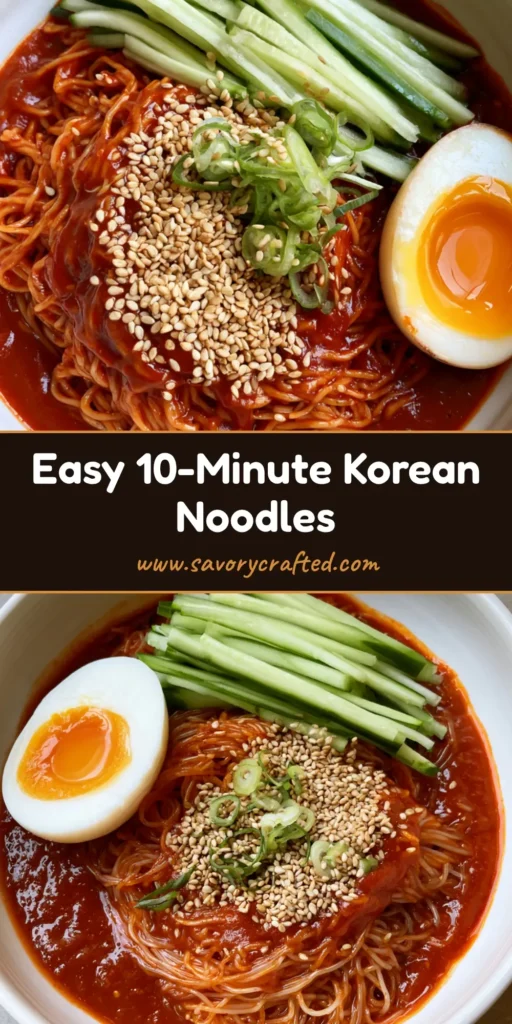
Did you love the vibrant red sauce and jammy yolk of this Bibim Guksu? Don’t lose this recipe! Click the “Pin” button to save this to your favorite Korean Food or 10-Minute Meals board on Pinterest.
Be sure to follow @savorycrafted for more elite home cooking inspiration. If you made this dish, please snap a handheld smartphone photo and share it in the comments below—I love seeing your glossy noodles! Don’t forget to leave a 5-star rating if this satisfied your spicy cravings.