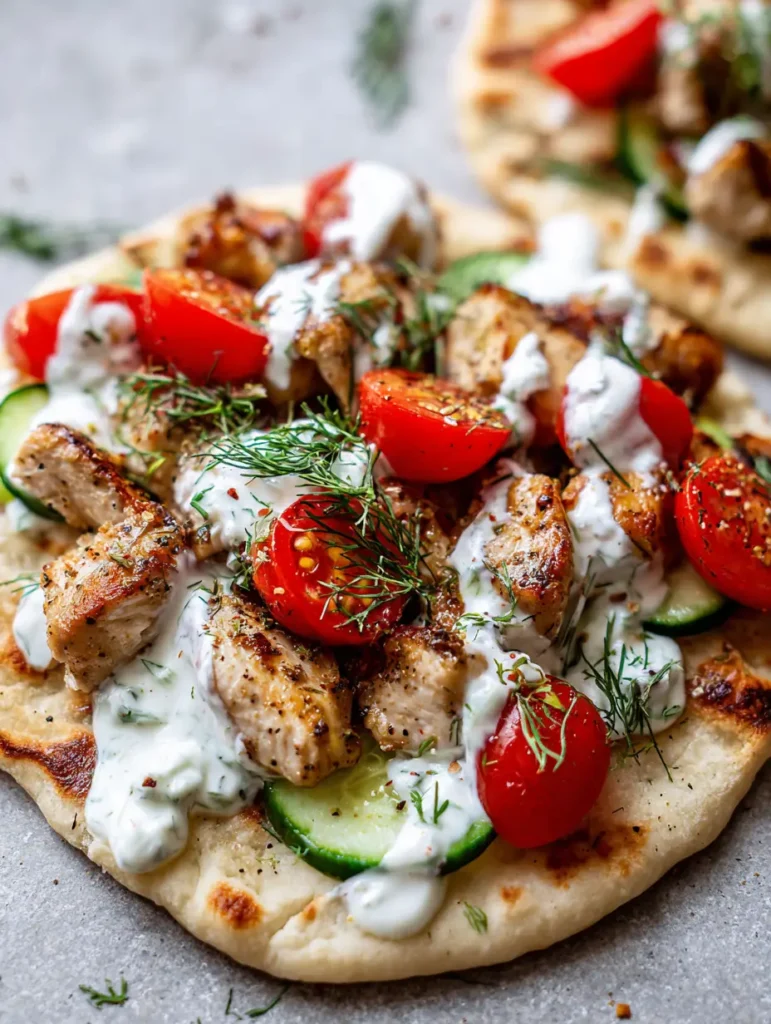
There is a specific culinary magic that happens when warm, fire-kissed bread meets the cooling crunch of fresh Mediterranean vegetables. This Greek Chicken Flatbread is not just a meal; it is a symphony of textures and temperatures designed to satisfy every corner of your palate. From the moment you see those golden-browned edges on the herb-crusted chicken to the first scent of fresh dill and dried oregano, you know you are in for a premium experience.
Inspired by the vibrant street food of Athens but elevated for the home kitchen, this recipe focuses on high-quality ingredients and precise searing techniques. We are moving beyond the basic wrap and into the territory of the “perfect bite.” Every element, from the thick, dollop-able tzatziki to the precisely sliced cucumber half-moons, plays a vital role in creating the visual masterpiece you see in our photography.
Whether you are looking for a high-protein lunch or a vibrant Friday night dinner, this flatbread delivers on every front. It is light enough for a warm summer evening but substantial enough to fuel a busy afternoon. Let’s dive into the science of the sear and the art of the assembly to bring this Mediterranean classic to your table.
Why This Mediterranean Flatbread Recipe Works
- Textural Contrast: The soft, pillowy flatbread features a slight exterior char, providing a smoky base for the juicy, tender pan-seared chicken.
- Temperature Play: Serving warm, seasoned chicken against chilled, creamy tzatziki and crisp cucumbers creates a multi-sensory eating experience.
- Herb-Forward Profile: We utilize both dried oregano for earthy depth in the chicken and fresh dill sprigs for a bright, floral finish.
- Visual Vibrancy: The pop of bright red cherry tomatoes against the deep green cucumbers ensures this dish looks as good as it tastes.
- Nutritional Balance: Packed with lean protein, healthy fats from Greek yogurt, and fiber-rich vegetables, it’s a complete meal in a handheld format.
The Foundation: Essential Ingredients for Your Greek Chicken Flatbread
To achieve the specific “forensic” look and taste of our blueprint, the choice of ingredients is paramount. We aren’t just looking for sustenance; we are looking for specific culinary reactions—like the Maillard reaction on our protein and the emulsification of our sauce.
Warm Charred Flatbread: You want a high-quality pita or naan. If you have the time, using a homemade garlic naan can elevate the flavor profile significantly, providing those essential bubbles and char marks.
Chicken Breast: We use 1 lb (450g) of boneless, skinless chicken breast, cut into uniform 1-inch (2.5cm) bite-sized pieces. This size ensures maximum surface area for seasoning and a fast, even sear.
The Fat for Searing: 2 tbsp (30ml) of high-smoke point oil, such as avocado oil or light olive oil. This is a “foundational invisible” ingredient required to get those browned edges described in our visual prompt without burning the meat.
Authentic Tzatziki Components: 1 cup (245g) of thick Greek yogurt is the only way to go. Avoid regular plain yogurt as it is too runny and will soak into the bread, compromising the “creamy thick” visual requirement.
The Produce: 1 cup (150g) of cherry tomatoes and 1 large English cucumber. English cucumbers are preferred because they have thinner skins and fewer seeds, allowing for those perfect, crisp “half-moon” slices.
The Herb Duo: 1 tsp (2g) of dried oregano for the chicken marinade and 1/4 cup (10g) of fresh dill sprigs for the final garnish. The dried version offers a concentrated savory note, while the fresh dill provides the “bright green” visual pop.
Must-Have Kitchen Tools for Success
To replicate the professional photography results, you need the right tools for heat distribution and precision cutting. Using a heavy-bottomed skillet is non-negotiable for getting the chicken right.
Cast Iron Skillet or Heavy Non-Stick Pan: This is necessary to achieve the “browned edges” on the chicken. Cast iron holds heat better, allowing the chicken to sear quickly without steaming in its own juices.
Box Grater or Food Processor: To get the cucumber fine enough for the tzatziki sauce while maintaining some texture. If you love these flavors, you’ll find similar prep work in our authentic chicken gyros.
Cheesecloth or Fine Mesh Sieve: This is the professional secret to thick tzatziki. You must squeeze the moisture out of the grated cucumber to prevent a watery sauce.
Chef’s Knife: A sharp blade is required for those clean, crisp cucumber half-moons and perfectly halved cherry tomatoes. Ragged edges will detract from the high-end visual appeal.
The Art of the Sear: Preparing the Herb-Seasoned Chicken
Step 1: The Mediterranean Marinade
In a medium bowl, combine your chicken pieces with 1 tbsp (15ml) of olive oil, the dried oregano, a pinch of sea salt, and cracked black pepper. Let this sit for at least 15 minutes. This “dry-ish” marinade ensures the herbs stick to the meat, creating that “visible herb seasoning” mentioned in our prompt.
Step 2: Achieving the Perfect Browned Edges
Heat your skillet over medium-high heat until the oil shimmers. Place the chicken in a single layer, ensuring they aren’t crowded. Listen for the “sizzle”—that is the sound of moisture evaporating and the Maillard reaction beginning. Sear for 3-4 minutes per side until a deep golden-brown crust forms on the edges.
Step 3: Resting the Protein
Remove the chicken from the pan and let it rest for 5 minutes. This allows the juices to redistribute, ensuring every bite is tender rather than dry. This is a foundational step in any protein-heavy dish, much like our garlic butter steak bites.
Crafting the Ultimate Thick Tzatziki Sauce
The sauce is the “glue” of the Greek Chicken Flatbread. If it’s too thin, the dish becomes messy; if it’s too thick, it won’t drizzle. We are aiming for a “creamy thick white” consistency that holds its shape on the bread.
The Cucumber Preparation
Grate half of your cucumber (save the other half for the slices). Place the grated cucumber in a clean kitchen towel and squeeze with all your might. You will be surprised at how much water comes out. Removing this water is what separates amateur tzatziki from professional-grade sauce.
The Mixing Process
Combine the squeezed cucumber with the Greek yogurt, 1 clove of minced garlic, a squeeze of lemon juice, and a pinch of salt. For an extra layer of flavor, you can whisk in a teaspoon of the same herb blend used on the chicken. This creates a cohesive flavor bridge across the entire flatbread.
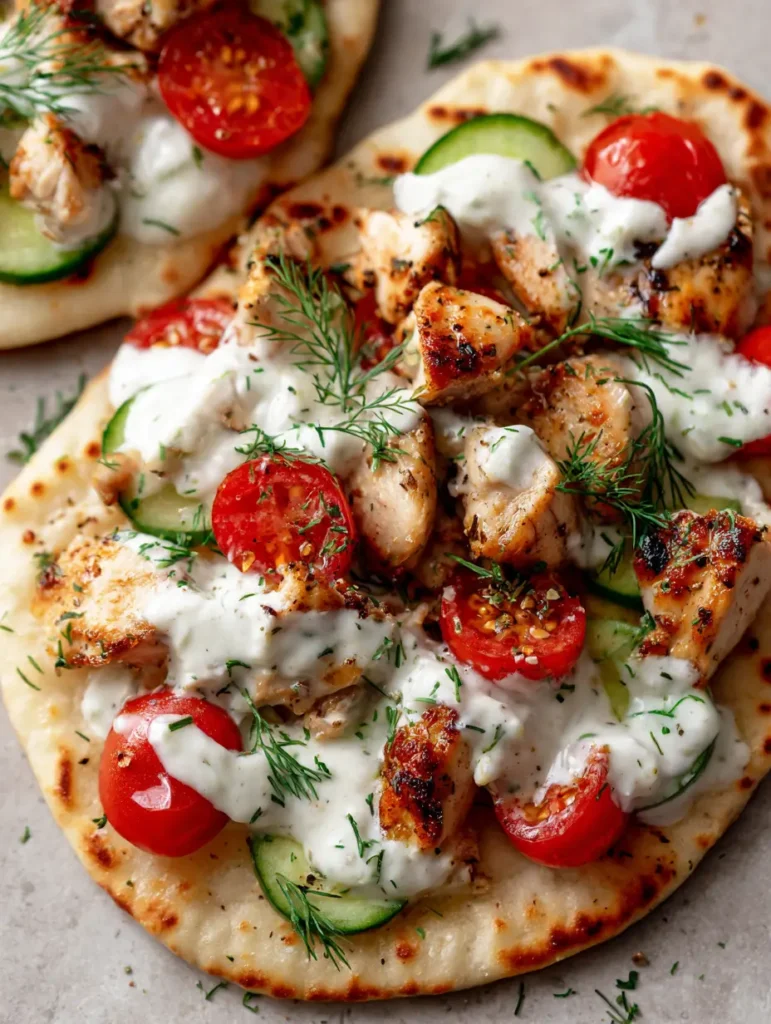
Assembly: Building the Visual Masterpiece
Now we bring the “Visual Recipe Blueprint” to life. Follow this order to ensure structural integrity and the best photographic results for your own social media shares.
1. Char the Base: Place your flatbreads directly over a gas flame for 10 seconds or in a dry pan until “slight golden char marks” appear. This adds a smoky aroma that complements the seared meat.
2. The Creamy Foundation: Spread a generous layer of tzatziki across the center of the flatbread. Save a small amount to drizzle over the top at the end for that “chef-style” finish.
3. Layering the Protein: Arrange the bite-sized chicken pieces over the sauce. The heat from the chicken will slightly warm the yogurt, releasing the scent of the garlic and oregano.
4. Fresh Toppings: Tucking the crisp green cucumber slices and bright red cherry tomatoes around the chicken. This layering provides height and ensures every bite has a mix of all ingredients.
5. The Final Flourish: Garnish with fresh green dill sprigs and a light dusting of dried oregano. This final touch adds the “natural soft daylight” appeal and reinforces the herb-forward flavor profile.
Culinary Expert Tips for the Best Results
- Don’t Overcrowd the Pan: If you put too much chicken in the skillet at once, the temperature drops and the meat will boil in its own juices. Work in batches to get those essential browned edges.
- Room Temperature Meat: Take your chicken out of the fridge 15 minutes before cooking. Cold meat hits a hot pan and toughens; room-temp meat sears more evenly.
- The Yogurt Matters: Use full-fat Greek yogurt (5% or higher) if possible. The fat content carries the flavor of the garlic and dill much better than non-fat versions.
- Warm the Flatbread Last: To keep the flatbread “soft and warm” as described in the blueprint, char it just seconds before assembly.
The Best Pairings for a Greek Feast
While this Greek Chicken Flatbread is a star on its own, you can turn it into a full Mediterranean spread. For a light side, try our classic mediterranean pasta salad, which mirrors many of these same fresh flavors.
If you’re looking for something with a bit more crunch, these crack chicken tenders are a fun, kid-friendly addition to the table. For a beverage pairing, a crisp white wine like a Santorini Assyrtiko or a simple sparkling water with lemon will cut through the richness of the tzatziki beautifully.
Storage, Reheating, and Meal Prep Advice
Storage: It is best to store the components separately. Keep the seared chicken in an airtight container in the fridge for up to 4 days. The tzatziki will stay fresh for 3 days. Store the sliced veggies separately to maintain their “crisp” texture.
Reheating: Reheat the chicken in a skillet over medium heat with a splash of water or olive oil to keep it moist. Avoid the microwave if possible, as it can make the chicken rubbery. Warm the flatbread in a toaster or pan.
Freezing: You can freeze the cooked chicken for up to 2 months. However, do not freeze the tzatziki or the fresh vegetables, as the texture will be completely destroyed upon thawing.
Frequently Asked Questions
Absolutely! Chicken thighs are more forgiving and remain juicy even with a hard sear. Just ensure they are cut into uniform bite-sized pieces for even cooking.
You can place the flatbread directly over a low gas burner flame for 5-10 seconds per side, or use a very hot, dry cast-iron skillet until char spots form.
The secret is two-fold: use full-fat Greek yogurt and squeeze every drop of liquid out of the grated cucumber using a kitchen towel before mixing.
Yes! Store the cooked chicken and tzatziki separately from the fresh vegetables and bread. Assemble just before eating to prevent the flatbread from getting soggy.
A thick, pillowy pita or a soft naan works best. Look for breads that can be charred over a flame without becoming brittle, as they need to fold easily.
The Ultimate Greek Chicken Flatbread Recipe Card
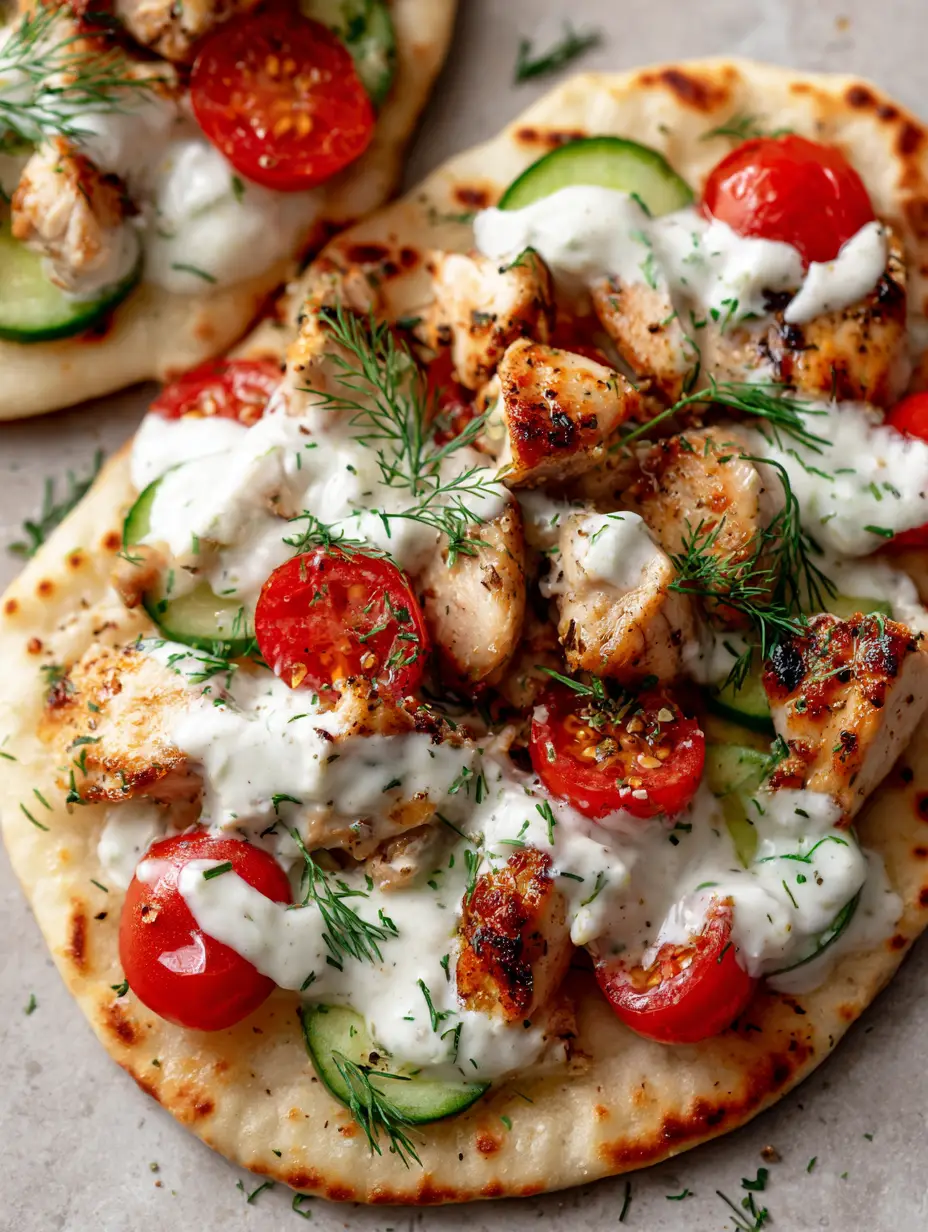
Greek Chicken Flatbread with Creamy Tzatziki and Fresh Herb Seasoning
Ingredients
Equipment
Method
- Toss chicken pieces with olive oil, dried oregano, salt, and pepper. Let sit for 15 minutes.
- Grate half the cucumber, squeeze out all moisture using a towel, and mix with Greek yogurt, minced garlic, and a pinch of salt. Chill until ready to serve.
- Heat a skillet over medium-high heat. Add chicken in a single layer and cook for 3-4 minutes per side until browned edges form and internal temp reaches 165°F (74°C).
- Briefly toast the flatbread over an open flame or in a dry pan until warm with slight char marks.
- Spread thick tzatziki on the flatbread, top with seared chicken, cucumber half-moons, and cherry tomatoes. Garnish with fresh dill and extra oregano.
Notes
Work in batches when searing the chicken to ensure a proper crust.
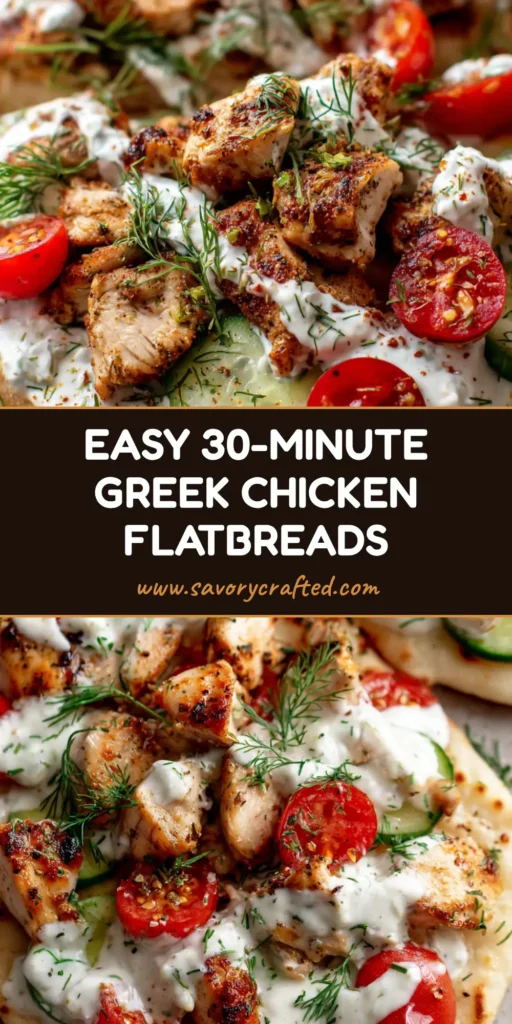
Join the Savory Crafted Community!
We hope this Greek Chicken Flatbread becomes a staple in your weekly rotation. The combination of charred bread, juicy herb chicken, and cool tzatziki is a timeless classic for a reason! If you made this, we would love to see your results.
Leave a comment below and let us know how your sear turned out! Did you add any extra toppings like feta or olives? Don’t forget to share your photos and tag us, and be sure to pin this recipe to your favorite Mediterranean board on Pinterest so you never lose it!