Chicken Osso Buco with Creamy Polenta and Braised Carrots
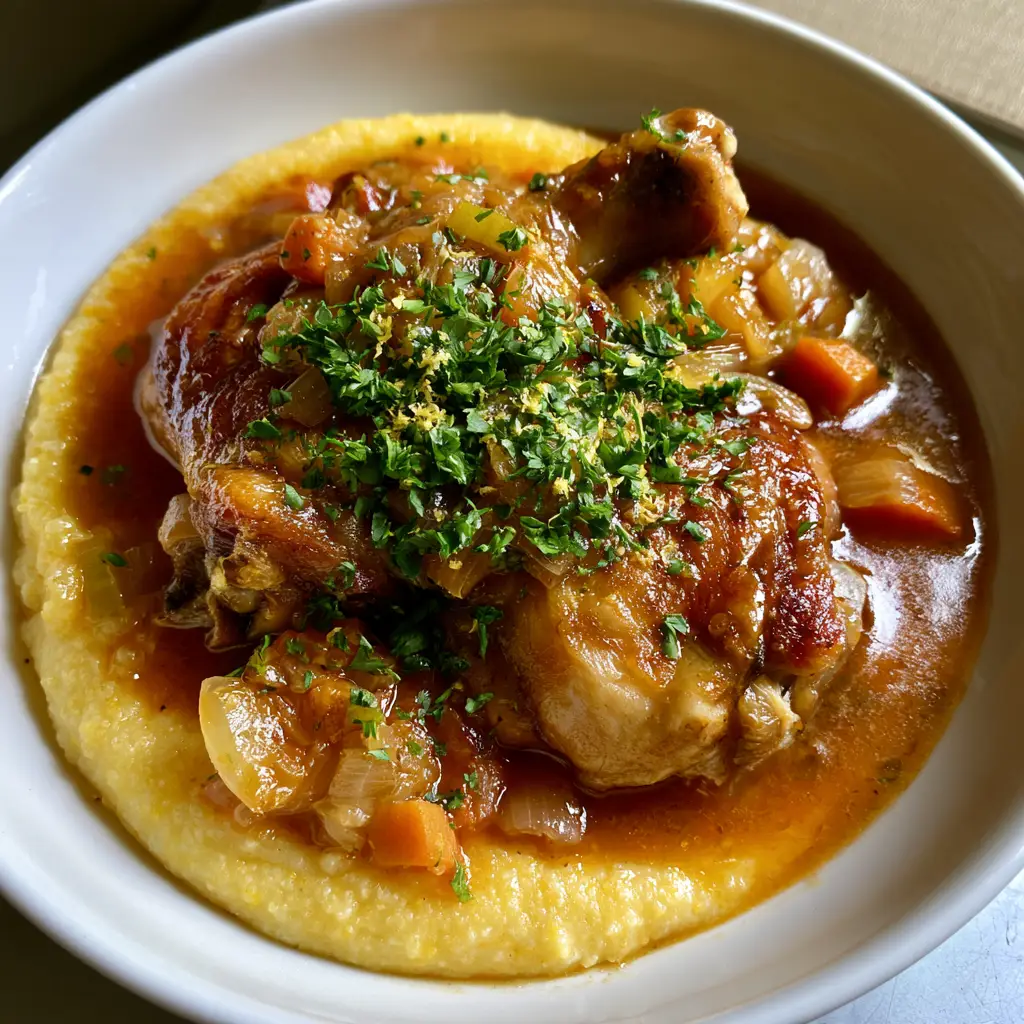
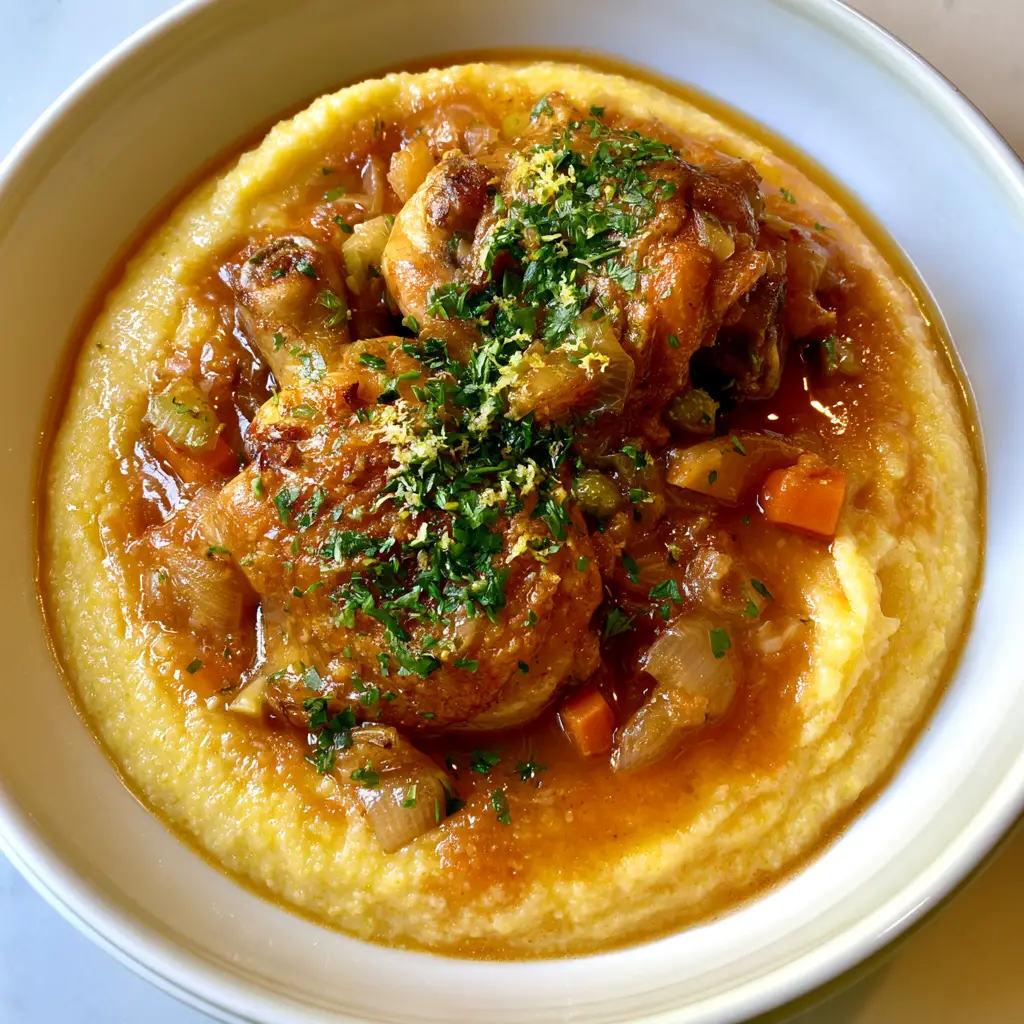
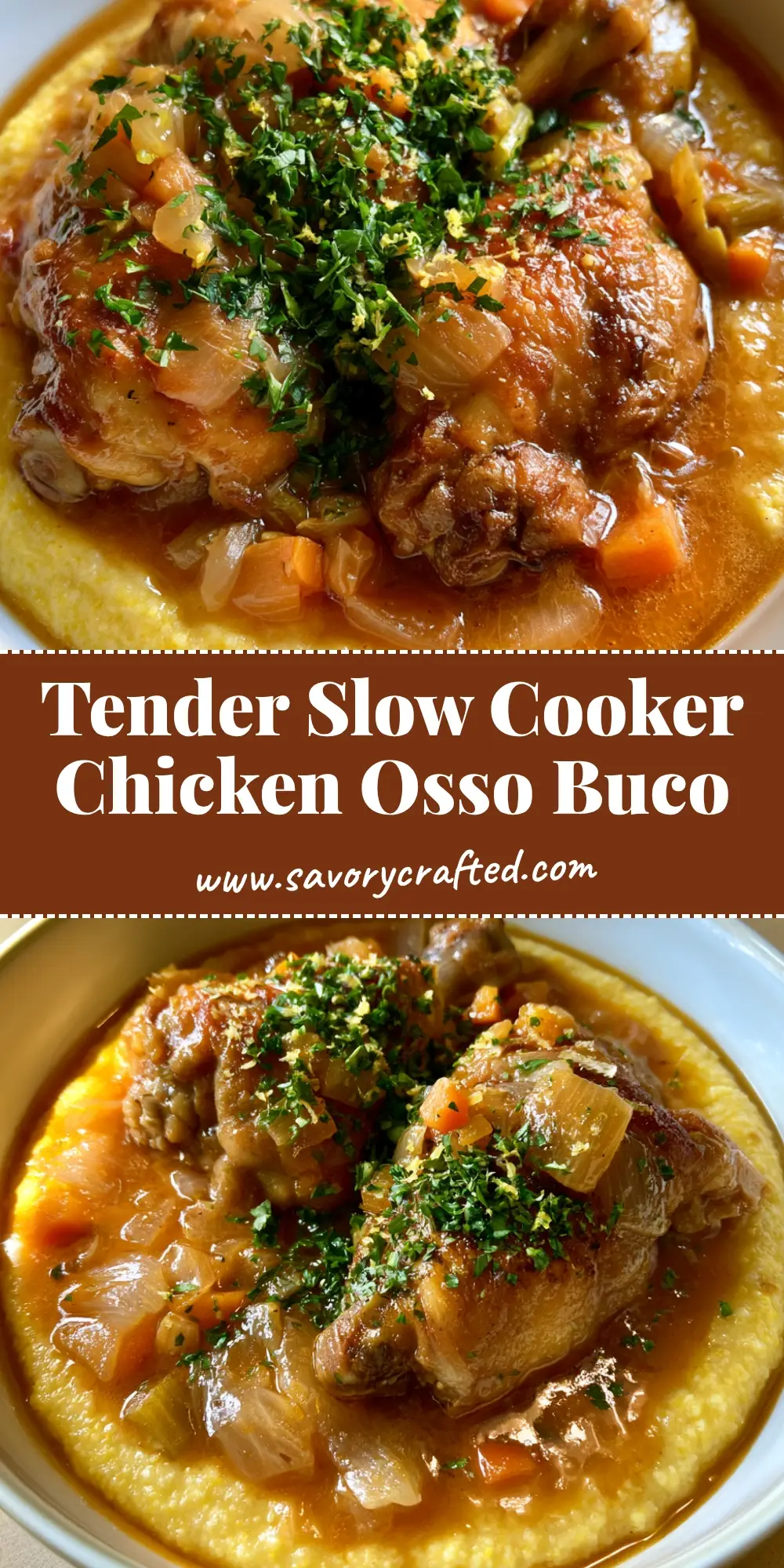
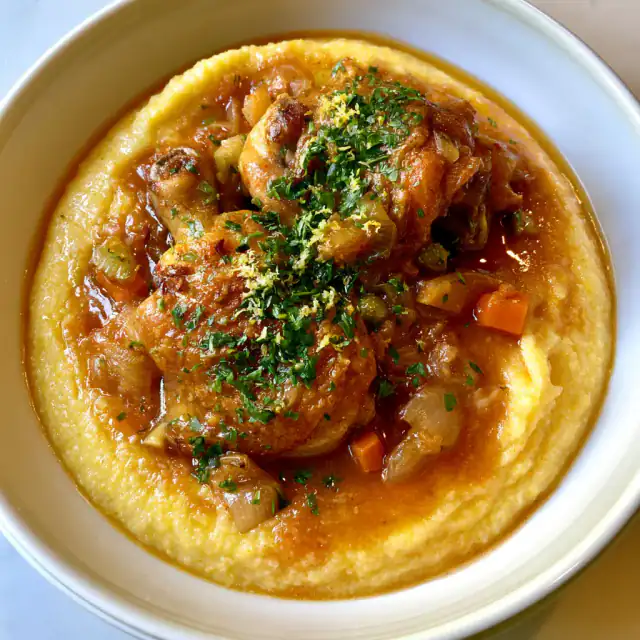
A budget-friendly, gourmet Chicken Osso Buco featuring tender bone-in chicken thighs braised in a glossy orange-brown reduction sauce served over smooth, creamy yellow polenta with a fresh lemon-parsley garnish.
Sear. Season chicken with salt and pepper. Sear in olive oil skin-side down until golden-brown, then flip and remove.
Sauté. Sauté onion, carrot, and celery in the rendered fat until translucent and soft.
Braise. Add tomato paste, wine, and stock. Return chicken to pan and simmer covered for 35-40 minutes.
Polenta. Boil water, whisk in cornmeal, and cook until thick and creamy. Stir in butter.
Finish. Serve chicken over polenta, spoon over the orange-brown sauce, and garnish with parsley and lemon zest.
Notes
Always pat the chicken skin completely dry before searing to ensure it gets crispy. The lemon zest (gremolata) is essential for cutting through the richness of the reduction sauce.
Chicken Osso Buco reimagines the Italian classic with succulent chicken thighs and a vibrant citrus garnish.
By Rachel NolanRachel NolanSavory Crafted is all about easy recipes that fit real family life. I share simple, flavorful meals made with everyday ingredients to help you cook with less stress and more joy, so you can spend more time around the table together.About Rachel NolanUpdated on
Chicken Osso Buco is the ultimate comfort food transformation, taking the sophisticated soul of the Italian classic and making it accessible, affordable, and incredibly flavorful for any night of the week. This recipe features succulent, bone-in chicken thighs braised until tender in a rich orange-brown reduction sauce, served over a velvety bed of creamy yellow polenta. By swapping traditional veal shanks for chicken, we achieve that signature melt-in-your-mouth texture in a fraction of the time, perfect for busy home cooks who refuse to sacrifice gourmet quality.
Why You Will Crave This Modern Italian Classic
Succulent Texture: The bone-in chicken thighs provide a rich, fatty depth that mimics the traditional marrow of veal, ensuring every bite is moist and tender.
Visual Masterpiece: The contrast between the bright yellow polenta and the glossy orange-brown sauce makes this a centerpiece-worthy dish.
Flavor Harmony: The brightness of fresh lemon zest and parsley cuts through the savory richness of the braised vegetables and meat.
Budget-Friendly Elegance: Achieve a high-end restaurant experience using simple, wholesome ingredients from your local pantry.
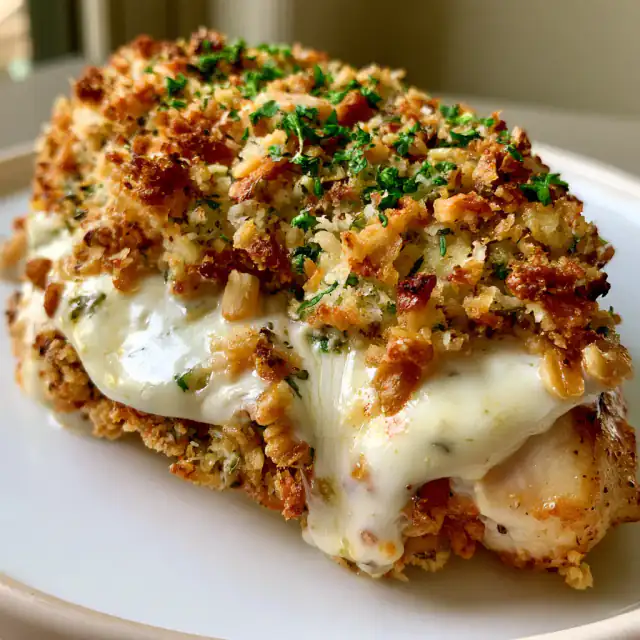
If you love high-protein, flavor-packed meals, you might also enjoy our parmesan crusted chicken for another weeknight win. But today, we are diving deep into the art of the braise.
Essential Ingredients for the Perfect Braise
To master Chicken Osso Buco, you need a foundation of aromatic vegetables and high-quality fats. Each component serves a specific culinary purpose to build layers of flavor.
Bone-in, Skin-on Chicken Thighs: 6-8 pieces. The bone provides structure and flavor during the braise, while the skin renders into a golden-brown crust.
Yellow Cornmeal (Polenta): 1 cup (160g). This creates the smooth, thick, and creamy yellow base that absorbs the savory sauce.
The Mirepoix: 1 large onion (translucent), 2 medium carrots (diced), and 2 stalks of celery (chopped). These aromatics form the "holy trinity" of the flavor base.
Dry White Wine: 1/2 cup (120ml). Used to deglaze the pan, picking up the "fond" (browned bits) and adding essential acidity.
Chicken Stock: 2 cups (480ml). The primary braising liquid that reduces into a rich, concentrated sauce.
Tomato Paste: 2 tablespoons (30ml). This provides the deep, orange-brown hue and a savory umami backbone.
Garlic: 4 cloves, minced. For that essential aromatic punch.
Fresh Herbs: 2 sprigs of thyme and 1 bay leaf for the pot; 1/2 cup (15g) fresh parsley for the garnish.
Lemon Zest: From 1 large lemon. This "Gremolata" element is critical for a traditional finish.
Cooking Oil & Butter: 2 tablespoons (30ml) olive oil for searing and 2 tablespoons (30g) butter for the polenta.
Step-by-Step Instructions to Culinary Excellence
1. Achieving the Perfect Golden Sear
Begin by patting your chicken thighs bone-dry with paper towels. Season generously with salt and black pepper. In a large heavy-bottomed skillet or Dutch oven, heat 2 tablespoons (30ml) of olive oil over medium-high heat.
Place the chicken skin-side down. Do not move them for 5-7 minutes. You are looking for a deep, golden-brown skin that releases easily from the pan. Flip and sear the bottom for 3 minutes, then remove the chicken and set aside on a plate. The rendered fat left in the pan is liquid gold for the next step.
2. Building the Aromatic Base
Reduce the heat to medium. Add the diced onions, carrots, and celery to the same pan. Sauté until the onions are translucent and the carrots begin to soften, about 8 minutes. Stir in the minced garlic and tomato paste, cooking for another 2 minutes until the paste turns a darker brick-red color.
Pour in the dry white wine. Use a wooden spoon to scrape every single browned bit off the bottom of the pan—this is where the rich orange-brown reduction sauce gets its complexity. Let the wine reduce by half.
While the sauce develops, you might think about dessert. Our cream cheese chocolate chip cookies are the perfect sweet follow-up to this savory meal.
3. The Low and Slow Braise
Nestle the chicken thighs back into the pan, skin-side up. Pour in the chicken stock until the liquid comes halfway up the sides of the chicken. Add the thyme and bay leaf. Bring to a simmer, then cover with a tight-fitting lid.
Simmer on low heat for 35-40 minutes. You know it is done when the meat is fork-tender but not falling off the bone. Remove the lid for the last 10 minutes to allow the sauce to thicken into a glossy, rich reduction.
4. Preparing the Creamy Yellow Polenta
While the chicken braises, bring 4 cups (960ml) of salted water or stock to a boil. Slowly whisk in the yellow cornmeal. Reduce heat to low and cook, stirring frequently, for about 20-25 minutes.
Finish the polenta by stirring in the butter and a handful of Parmesan cheese if desired. It should be smooth, thick, and vibrably yellow. If you want a different side, check out our smashed potatoes, though polenta is the traditional choice here.
5. The Final Garnish and Presentation
The secret to Chicken Osso Buco is the finish. Finely chop the fresh parsley and zest the lemon. Mix them together in a small bowl. This brightness is the perfect foil for the deep, braised flavors.
Expert Tips for Success
Don't Crowd the Pan: Sear the chicken in batches if necessary. Overcrowding steams the meat instead of searing it, losing that vital golden-brown texture.
Use Fresh Aromatics: While dried herbs work in a pinch, the fresh parsley and lemon zest are non-negotiable for the authentic "Gremolata" finish.
Check Your Liquid: If the sauce reduces too quickly, add a splash more chicken stock to maintain that glossy consistency.
Quality Wine Matters: Use a wine you would actually drink. A dry Pinot Grigio or Sauvignon Blanc works best for this reduction.
Storage, Reheating, and Freezing
To Store: Place leftovers in an airtight container for up to 3 days. The flavors actually improve overnight as the chicken continues to absorb the sauce.
To Reheat: Gently warm the chicken and sauce in a skillet over low heat with a splash of water to loosen the reduction. Reheat polenta separately, adding a bit of milk or broth to restore its creaminess.
To Freeze: You can freeze the chicken and sauce for up to 3 months. We do not recommend freezing the polenta, as the texture can become grainy upon thawing.
What to Serve With This Dish
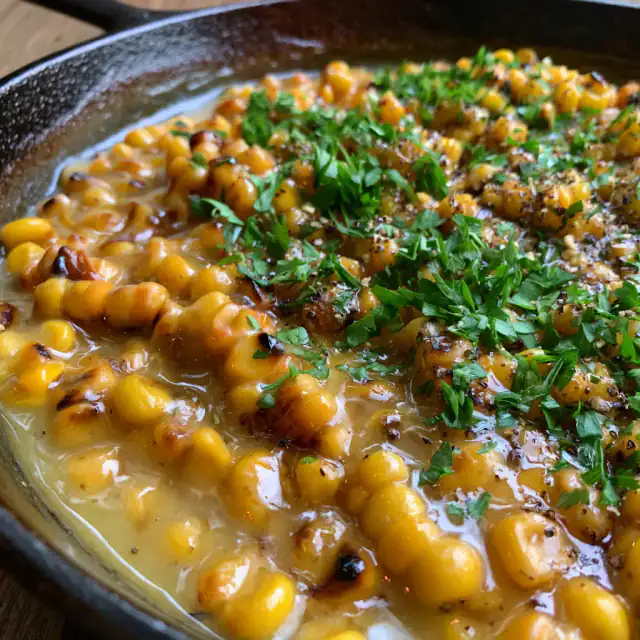
While the polenta is the traditional base, this dish pairs beautifully with a crisp green salad or roasted root vegetables. If you are looking for more vegetable-forward sides, our honey butter skillet corn adds a lovely sweetness that complements the savory sauce.
Frequently Asked Questions
Can I use chicken breasts instead of thighs for Osso Buco?
We strongly recommend bone-in, skin-on thighs. Breasts lean out too quickly during the 40-minute braise and can become dry, whereas thighs contain the fat and connective tissue needed for a rich sauce.
What is the best wine to use for the reduction sauce?
A dry white wine like Pinot Grigio, Sauvignon Blanc, or an un-oaked Chardonnay works best. Avoid sweet wines as they will concentrate too much sugar as the sauce reduces.
Do I have to serve this over polenta?
While creamy polenta is traditional and absorbs the sauce beautifully, you can also serve Chicken Osso Buco over mashed potatoes, risotto, or even a wide noodle like pappardelle.
Why is my sauce not turning a rich orange-brown color?
The color comes from two places: properly searing the chicken until golden-brown and allowing the tomato paste to 'fry' with the vegetables for 2 minutes before adding liquid.
How do I make the polenta extra creamy?
Whisk constantly during the first few minutes to prevent lumps, and finish with a cold knob of butter and freshly grated Parmesan cheese at the very end.
The Ultimate Chicken Osso Buco Recipe
Share Your Culinary Masterpiece!
Did you make this Chicken Osso Buco? We want to see your results! Save this recipe to your Dinner Inspiration board on Pinterest and follow savorycrafted for more gourmet weeknight meals. Leave a comment below with a photo of your dish and give us a 5-star rating if you loved it!
Recipe
Chicken Osso Buco with Creamy Polenta and Braised Carrots
Note: Always pat the chicken skin completely dry before searing to ensure it gets crispy. The lemon zest (gremolata) is essential for cutting through the richness of the reduction sauce.
Only numeric ingredient quantities scale. Package sizes, ingredient notes, directions, pan sizes and cooking times remain for the original batch. Adjust these separately; use partial ingredients where needed. Quantities written as ranges or words stay unchanged.
Recipe by Rachel Nolan, Savory Crafted. Source: https://savorycrafted.com/chicken-osso-buco
Ingredients
Main Dish
Side and Garnish
Directions
Sear:
Season chicken with salt and pepper. Sear in olive oil skin-side down until golden-brown, then flip and remove.
Sauté:
Sauté onion, carrot, and celery in the rendered fat until translucent and soft.
Braise:
Add tomato paste, wine, and stock. Return chicken to pan and simmer covered for 35-40 minutes.
Polenta:
Boil water, whisk in cornmeal, and cook until thick and creamy. Stir in butter.
Finish:
Serve chicken over polenta, spoon over the orange-brown sauce, and garnish with parsley and lemon zest.
*The % Daily Value tells you how much a nutrient in a food serving contributes to a daily diet. 2,000 calories a day is used for general nutrition advice. Nutrition values are estimates.
Reviews
Please keep reviews kind and about the recipe — thank you for sharing.
 By