There’s something uniquely luxurious about a bowl of shrimp bisque. It’s the kind of dish that feels like a special occasion, reserved for fine-dining restaurants with white tablecloths. But what if you could capture that velvety, elegant experience right in your own kitchen?
This recipe delivers on that promise. We’re crafting a bisque that is deeply flavorful and unbelievably smooth, with a beautiful orange-pink hue that can only come from rich, flavorful ingredients. You’ll see, smell, and taste the difference.
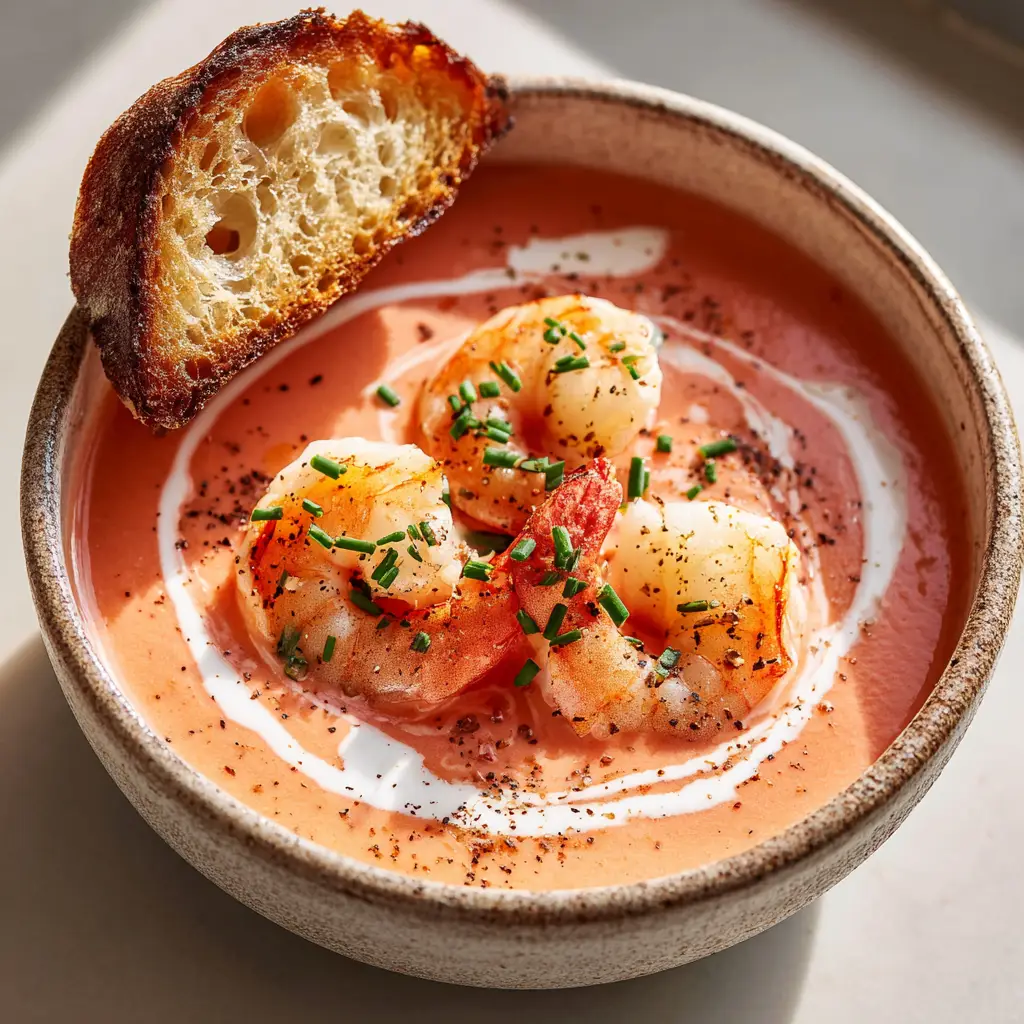
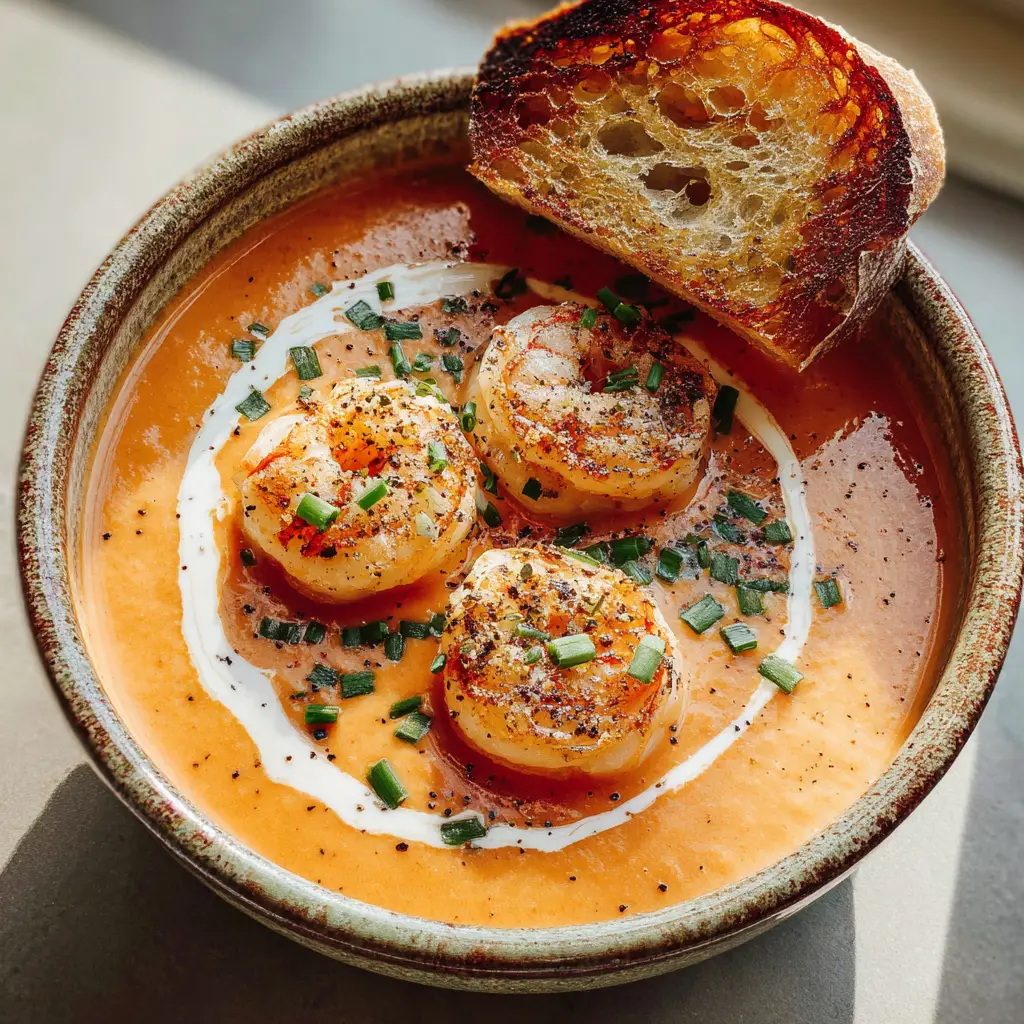
At the center of the bowl, plump, pink shrimp, perfectly pan-seared, provide a delightful textural contrast. A delicate swirl of cool heavy cream, a sprinkle of bright green chives, and a grind of coarse black pepper finish the dish, making it look exactly as incredible as it tastes. Paired with a crusty slice of toasted baguette for dipping, it’s pure comfort.
Why You’ll Love This Recipe
- Incredibly Velvety Texture: We use a classic French technique to build a soup base that blends into a flawlessly smooth, creamy consistency that coats a spoon perfectly.
- Deep, Rich Seafood Flavor: The secret is using the shrimp shells to make a quick, flavorful stock. This step adds a layer of depth you simply can’t get from a carton.
- Visually Stunning Presentation: Following these steps, your final dish will look just like the photos—a rustic bowl of orange-pink bisque, garnished with plump shrimp, a cream swirl, and fresh chives.
- Surprisingly Simple: While the name sounds fancy, the process is straightforward and perfect for an enthusiastic home cook looking to impress.
Ingredients & Substitutions
The magic of this bisque lies in using quality ingredients to build layers of flavor. Here’s what you’ll need.
For the Shrimp & Stock:
- Large Shrimp: 1 lb (450g), raw, shells on. The shrimp meat is the star garnish, and the shells are the secret weapon for our flavorful stock. Opt for the best quality you can find.
- Unsalted Butter: 2 tbsp (30g). Used to sauté the shells and aromatics, this adds a rich, nutty foundation to the stock.
- Dry Sherry or Brandy: 1/4 cup (60ml). This deglazes the pan and adds a crucial layer of complex, aromatic depth that is characteristic of classic bisque.
For the Bisque Base:
- Unsalted Butter: 4 tbsp (60g). This forms the base of our roux, which is essential for thickening the bisque and giving it a velvety body.
- All-Purpose Flour: 1/4 cup (30g). The other half of the roux. It must be cooked properly to avoid a raw flour taste.
- Yellow Onion: 1 medium, chopped. Provides the foundational aromatic sweetness that balances the rich seafood flavor.
- Carrot: 1 medium, chopped. Adds a touch of sweetness and contributes to the bisque’s signature orange-pink color.
- Celery: 1 stalk, chopped. Completes the classic mirepoix, offering a subtle, earthy note to the aromatic base.
- Garlic: 2 cloves, minced. Adds a pungent, aromatic kick that elevates the other flavors.
- Tomato Paste: 2 tbsp (30g). A key ingredient for both flavor and color, providing a concentrated, umami-rich tomato background and deepening the rosy hue.
- Bay Leaf: 1. Infuses the soup with a subtle herbal note as it simmers.
- Heavy Cream: 1 cup (240ml). This is what makes the bisque ultra-creamy and luxurious. A little is stirred in at the end, and a little is reserved for the garnish swirl.
- Salt and White Pepper: To taste. We use white pepper to maintain the smooth, unblemished color of the final soup.
For Garnish & Serving:
- Olive Oil: 1 tbsp (15ml). For pan-searing the shrimp and toasting the baguette.
- Fresh Chives: 1 tbsp, finely chopped. Their mild, fresh oniony bite cuts through the richness of the bisque beautifully.
- Cracked Black Pepper: For a final, pungent garnish. The coarse grind provides a rustic, visual appeal.
- Crusty Baguette: 4 slices. Toasted until golden, it’s the perfect vessel for soaking up every last drop of the soup.
Equipment Needed
- Large Dutch Oven or Heavy-Bottomed Pot
- High-Powered Blender or Immersion Blender
- Fine-Mesh Sieve
- Skillet
Step-by-Step Instructions
We’ll approach this in stages: creating the stock, building the soup base, and finishing the dish. Follow along closely for flawless results.
Part 1: Prepare the Shrimp and Quick Stock
- Peel and Devein Shrimp: Peel the shrimp, placing the shells and tails in one bowl and the cleaned shrimp meat in another. Cover the shrimp meat and refrigerate until needed.
- Sauté Aromatics: In your Dutch oven, melt 2 tbsp (30g) of butter over medium heat. Add the shrimp shells and cook, stirring frequently, until they turn bright pink and fragrant. This should take about 3-4 minutes.
- Deglaze and Simmer: Pour in the 1/4 cup (60ml) of sherry or brandy to deglaze the pot, scraping up any browned bits from the bottom. Let it bubble and reduce for about a minute. Add 4 cups (960ml) of water and the bay leaf. Bring to a simmer, then reduce heat to low, partially cover, and let it gently simmer for 20-25 minutes. Do not boil.
- Strain the Stock: Pour the stock through a fine-mesh sieve into a large bowl, pressing on the shells to extract all the liquid. Discard the shells and bay leaf. You should have about 3 cups of flavorful stock.
Part 2: Build the Bisque Base
- Sauté Vegetables: Wipe the Dutch oven clean. Melt the remaining 4 tbsp (60g) of butter over medium heat. Add the chopped onion, carrot, and celery. Cook, stirring occasionally, until softened and the onion is translucent, about 6-8 minutes. You’re looking for a soft, sweet base, not browned vegetables.
- Cook the Aromatics: Stir in the minced garlic and tomato paste. Cook for another 2 minutes until the garlic is fragrant and the tomato paste has deepened to a brick-red color. This step is crucial for developing a rich, non-raw tomato flavor.
- Make the Roux: Sprinkle the 1/4 cup (30g) of flour over the vegetables. Stir constantly for 2 minutes to cook out the raw flour taste. The mixture will be thick and paste-like.
- Combine and Simmer: Slowly pour in the strained shrimp stock, whisking continuously to prevent lumps. Once the stock is fully incorporated and the mixture is smooth, bring it to a gentle simmer. Reduce the heat to low, cover, and let it cook for 15 minutes to allow the flavors to meld.
Part 3: Blend, Finish, and Garnish
- Blend Until Velvety: Carefully transfer the hot soup to a high-powered blender in batches, or use an immersion blender directly in the pot. Blend until the soup is completely smooth and velvety. For an extra-refined texture, you can pass the blended soup through the fine-mesh sieve one more time.
- Add Cream and Season: Return the blended soup to the pot over low heat. Stir in 3/4 cup (180ml) of the heavy cream. Do not let the soup boil after this point. Season to taste with salt and white pepper.
- Sear the Shrimp: While the soup is heating, pat the refrigerated shrimp dry with paper towels and season lightly with salt. Heat 1 tbsp (15ml) of olive oil in a skillet over medium-high heat. Once shimmering, add the shrimp in a single layer. Sear for 1-2 minutes per side, just until they are pink, plump, and cooked through. Remove from heat immediately.
- Toast the Baguette: You can toast the baguette slices in the same skillet, adding a touch more oil if needed, until golden brown on both sides.
- Serve Immediately: Ladle the hot bisque into rustic ceramic bowls. Arrange three pan-seared shrimp in the center of each. Delicately drizzle the remaining 1/4 cup (60ml) of heavy cream in a thin swirl around the shrimp. Sprinkle with finely chopped chives and coarse cracked black pepper. Rest a slice of toasted baguette on the rim of the bowl and serve.
Expert Tips for Success
- Don’t Skip the Shell Stock: Using the shrimp shells to make a quick stock is the single most important step for achieving a deep, authentic seafood flavor. Store-bought stock won’t compare.
- For the Smoothest Texture, Strain Twice: After making the stock and after blending the soup, straining through a fine-mesh sieve is the professional secret to a truly velvety, luxurious mouthfeel.
- Low and Slow is Key: From simmering the stock to finishing the soup with cream, gentle heat is crucial. Boiling the stock can make it cloudy, and boiling the cream can cause it to break or curdle.
- Taste and Adjust Seasoning at the End: The flavors will concentrate as the bisque simmers. Wait until the very end, after adding the cream, to do your final tasting and seasoning adjustment.
Storage & Reheating
This bisque is a fantastic make-ahead dish, perfect for elegant and stress-free entertaining.
To Store: Allow the bisque to cool completely, then store it in an airtight container in the refrigerator for up to 2 days. For best results, store the soup base separately from the cooked shrimp and other garnishes.
To Reheat: Gently reheat the bisque in a saucepan over low heat, stirring occasionally until warmed through. Do not let it boil. Sear the shrimp fresh just before serving for the best texture. Assemble the bowls with garnishes right before they go to the table.
Freezing: We don’t recommend freezing this bisque, as the cream can separate upon thawing, resulting in a grainy texture.
What to Serve With This
While this shrimp bisque is a stunning meal on its own with the crusty baguette, it also pairs beautifully with lighter dishes. Consider a fresh, crisp salad like our Cucumber Mozzarella Salad to cut through the richness. For a more substantial “soup and sandwich” meal, this bisque is incredible alongside Shrimp and Crab Biscuit Melts. And if you’re baking for the day, a slice of fresh Sourdough Discard Focaccia is a fantastic alternative to the baguette for dipping.
Frequently Asked Questions
Yes, this is a great make-ahead recipe. You can prepare the soup base, cool it, and store it in the fridge for up to two days. Reheat it gently on the stove and prepare the shrimp and garnishes just before serving for the best results.
Absolutely. If using frozen raw shrimp, make sure they are fully thawed before you begin. You can thaw them overnight in the refrigerator or under cold running water.
A grainy texture usually comes from one of two things: not cooking the flour enough in the roux, or boiling the soup after the cream has been added. Be sure to cook the flour for a full 2 minutes and keep the soup at a gentle simmer, never a rolling boil, once the cream is in.
A bisque is a specific type of soup that is traditionally of French origin. It is characterized by its smooth, creamy texture and is typically made from the strained broth of crustaceans like lobster, shrimp, or crab.
The secret is twofold: using a high-powered blender to fully emulsify the soup base, and then straining it through a fine-mesh sieve to remove any remaining fibrous vegetable bits. This ensures a truly velvety texture.
The Perfect Bowl Awaits
Crafting this elegant shrimp bisque is a rewarding process that ends with a truly spectacular meal. Each spoonful is a perfect balance of deep seafood flavor and creamy, velvety texture. We hope you love making it as much as we do.
If you tried this recipe, please leave a comment below! We’d love to see your creations. For more culinary adventures, follow us on Pinterest @CrispCrumbs.
Shrimp Bisque Recipe
Velvety Shrimp Bisque: An Elegant, Easy Recipe
Ingredients
Equipment
Method
- Peel the shrimp, placing the shells and tails in one bowl and the cleaned shrimp meat in another. Cover the shrimp meat and refrigerate until needed.
- In your Dutch oven, melt 2 tbsp (30g) of butter over medium heat. Add the shrimp shells and cook, stirring frequently, until they turn bright pink and fragrant. This should take about 3-4 minutes.
- Pour in the 1/4 cup (60ml) of sherry or brandy to deglaze the pot, scraping up any browned bits from the bottom. Let it bubble and reduce for about a minute. Add 4 cups (960ml) of water and the bay leaf. Bring to a simmer, then reduce heat to low, partially cover, and let it gently simmer for 20-25 minutes. Do not boil.
- Pour the stock through a fine-mesh sieve into a large bowl, pressing on the shells to extract all the liquid. Discard the shells and bay leaf. You should have about 3 cups of flavorful stock.
- Wipe the Dutch oven clean. Melt the remaining 4 tbsp (60g) of butter over medium heat. Add the chopped onion, carrot, and celery. Cook, stirring occasionally, until softened and the onion is translucent, about 6-8 minutes.
- Stir in the minced garlic and tomato paste. Cook for another 2 minutes until the garlic is fragrant and the tomato paste has deepened to a brick-red color.
- Sprinkle the 1/4 cup (30g) of flour over the vegetables. Stir constantly for 2 minutes to cook out the raw flour taste. The mixture will be thick and paste-like.
- Slowly pour in the strained shrimp stock, whisking continuously to prevent lumps. Once the stock is fully incorporated and the mixture is smooth, bring it to a gentle simmer. Reduce the heat to low, cover, and let it cook for 15 minutes to allow the flavors to meld.
- Carefully transfer the hot soup to a high-powered blender in batches, or use an immersion blender directly in the pot. Blend until the soup is completely smooth and velvety.
- Return the blended soup to the pot over low heat. Stir in 3/4 cup (180ml) of the heavy cream. Do not let the soup boil after this point. Season to taste with salt and white pepper.
- While the soup is heating, pat the refrigerated shrimp dry with paper towels and season lightly with salt. Heat 1 tbsp (15ml) of olive oil in a skillet over medium-high heat. Once shimmering, add the shrimp in a single layer. Sear for 1-2 minutes per side, just until they are pink, plump, and cooked through.
- Toast the baguette slices in the same skillet, adding a touch more oil if needed, until golden brown on both sides.
- Ladle the hot bisque into rustic ceramic bowls. Arrange three pan-seared shrimp in the center of each. Delicately drizzle the remaining 1/4 cup (60ml) of heavy cream in a thin swirl around the shrimp. Sprinkle with finely chopped chives and coarse cracked black pepper. Rest a slice of toasted baguette on the rim of the bowl and serve.
Notes
For the Smoothest Texture, Strain Twice: After making the stock and after blending the soup, straining through a fine-mesh sieve is the professional secret to a truly velvety, luxurious mouthfeel.
Low and Slow is Key: From simmering the stock to finishing the soup with cream, gentle heat is crucial. Boiling can damage the flavors and textures.
Taste and Adjust Seasoning at the End: The flavors will concentrate as the bisque simmers. Wait until the very end, after adding the cream, to do your final tasting and seasoning adjustment.